What Is the Best Firewood for a Smokeless Fire Pit?
On this page (3 sections)
When choosing firewood for your smokeless fire pit, **hardwoods like oak, maple, and hickory** are your best bet. They burn hotter, longer, and produce the least amount of smoke. This ensures you get the most enjoyment from your smokeless fire pit experience. You want wood that is also properly seasoned to achieve this.
The key to a smokeless fire is not just the fire pit design, but also the fuel you use. Using the right wood means less coughing and more cozy ambiance. Many people find that seasoned hardwoods offer the cleanest burn, which is essential for enjoying your fire pit without the smoke. We’ve researched what works best.
- Best woods: Oak, maple, hickory.
- Why: Burn hot, long, and with minimal smoke.
- Seasoning is key: Look for dry, aged wood.
- Avoid: Softwoods like pine or fresh-cut logs.
- They cause: More smoke and less heat.
Let’s dive into why these woods are superior for your smokeless fire pit and what to avoid to keep that smoke at bay.
Choosing the Right Wood for Your Smokeless Fire Pit
Selecting the correct firewood is surprisingly important for your smokeless fire pit. It directly impacts the amount of smoke you’ll experience. You want a fire that’s more about warmth and ambiance, not coughing fits.
Understanding Wood Types and Smoke Production
Not all wood is created equal when it comes to burning. Some types produce a lot of smoke, while others burn cleanly. This difference comes down to the wood’s density and resin content. For a truly smokeless experience, you need wood that burns hot and efficiently.
Hardwoods vs. Softwoods: The Smoke Factor
The biggest distinction to make is between hardwoods and softwoods. Hardwoods come from deciduous trees, like oak or maple. These trees lose their leaves annually. Softwoods come from coniferous trees, such as pine or fir, which have needles and cones.
Hardwoods are generally denser. This means they pack more fuel into the same volume. Their denser structure causes them to burn slower and hotter. This hotter burn helps to break down the wood more completely. It results in less unburnt material turning into smoke. We found this to be a consistent factor in clean burns.
Softwoods, on the other hand, are less dense. They also tend to have higher resin content. When burned, these resins vaporize quickly and contribute to smoke. You’ll notice they ignite easily and burn fast. They can be good for starting a fire, but they aren’t ideal for a long, clean burn. Many sources confirm that softwoods are a major source of smoke. It’s like comparing a quick sparkler to a long-lasting candle.
The Best Firewood Recommendations
Based on research and common recommendations, several hardwood types stand out for smokeless fire pits. These woods provide the best combination of heat output and minimal smoke.
Oak: The Reliable Classic
Oak is often cited as a top choice. It’s a dense hardwood. This means it burns for a long time. It also produces a good amount of heat. Oak logs burn relatively slowly. This contributes to a more consistent and cleaner fire. You’ll enjoy fewer flare-ups and less smoke. Many firewood vendors consider oak a gold standard. Its availability makes it a practical choice for most people.
Maple: A Sweet Burner
Maple is another excellent hardwood. It burns hot and produces a pleasant aroma. Like oak, maple is dense. This allows for a longer burn time compared to softer woods. It’s known for producing very little smoke when properly seasoned. Maple wood breaks down efficiently, leaving behind coals rather than excessive ash or smoke. We found that maple offers a consistent and enjoyable burn.
Hickory: For Intense Heat and Flavor
Hickory is a very dense and hard wood. It’s famous for burning intensely hot. This intense heat is great for maintaining a strong fire. Hickory logs burn for a considerable amount of time. They also produce minimal smoke, especially when seasoned. This wood is also popular for barbecuing because of its distinct smoky flavor. For your fire pit, this translates to a robust and clean-burning experience. Many people find hickory to be a premium option.
Other Good Hardwood Options
While oak, maple, and hickory are top-tier, other hardwoods also perform well. Consider fruitwoods like apple or cherry. They burn well and have a pleasant scent. Ash is another good choice; it’s a bit lighter but still burns hot and clean. We found that these options generally provide a better burn than any softwood.
| Wood Type | Density | Burn Time | Smoke Level | Heat Output |
|---|---|---|---|---|
| Oak | High | Long | Low | High |
| Maple | High | Long | Low | High |
| Hickory | Very High | Very Long | Very Low | Very High |
| Pine (Softwood) | Low | Short | High | Medium |
| Fir (Softwood) | Low | Short | High | Medium |
The Critical Importance of Seasoned Firewood
Even the best types of wood won’t perform well if they aren’t properly seasoned. Seasoning is the process of drying out firewood. This removes most of the moisture content. Unseasoned wood is wet wood. Burning wet wood is the primary cause of excessive smoke. It’s like trying to boil water with a damp sponge.
What is Seasoned Wood?
Seasoned firewood typically has a moisture content of 20% or less. It has been left to air dry for at least six months, and often up to a year or more. This drying process allows the wood to release its natural moisture. It becomes lighter in weight and easier to split. You can often tell seasoned wood by its appearance. It usually has cracks or checks on the ends. It might also have a duller color compared to fresh-cut wood.
Why Moisture Content Matters
When you try to burn wet wood, the fire’s energy is first used to boil off the water inside. This process creates steam. Steam mixes with the smoke. It makes the smoke thicker and more acrid. It also lowers the overall temperature of your fire. A cooler fire burns less efficiently. This means more smoke and less heat. Experts agree that moisture content is key to a clean burn (USDA Forest Service). Aim for wood that feels light and sounds hollow when you knock two pieces together.
How to Check if Wood is Seasoned
There are a few simple ways to check if your wood is ready.
- Look at the Ends: You should see cracks or “checks.”
- Listen to the Sound: Tap two pieces together. They should make a clear, hollow sound, not a dull thud.
- Feel the Weight: Seasoned wood is lighter than wet wood of the same size.
- Check the Bark: The bark might be loose or peeling on some seasoned woods.
- Smell the Wood: Fresh wood has a strong sap smell. Seasoned wood smells more like earth or mushrooms.
What Firewood to Avoid
Just as important as knowing what wood to use is knowing what to avoid. Certain types of wood are guaranteed to produce more smoke and less satisfaction.
Softwoods: The Smoke Magnets
As we discussed, pine, fir, spruce, and cedar are softwoods. They are easy to light. They burn quickly. However, they are also very smoky. Their high resin content contributes significantly to smoke. They also burn out fast. This means you’ll be adding logs much more frequently. For a smokeless fire pit, these are generally poor choices. Save them for campfires where smoke isn’t as much of a concern.
Green or Unseasoned Wood
Burning fresh-cut wood, also called “green” wood, is a guaranteed way to create smoke. It hasn’t had time to dry out. As we covered, the moisture content is too high. You’ll get a smoldering, smoky fire. You’ll also likely end up with creosote buildup in your fire pit, which isn’t ideal. Always ensure your wood is properly seasoned. This is non-negotiable for a smokeless experience.
Treated or Painted Wood
You should never burn treated lumber, painted wood, or particle board. These materials contain chemicals. When burned, these chemicals release toxic fumes into the air. This is dangerous for your health and the environment. It can also damage your fire pit. Stick to natural, untreated firewood. Your lungs will thank you.
Conclusion
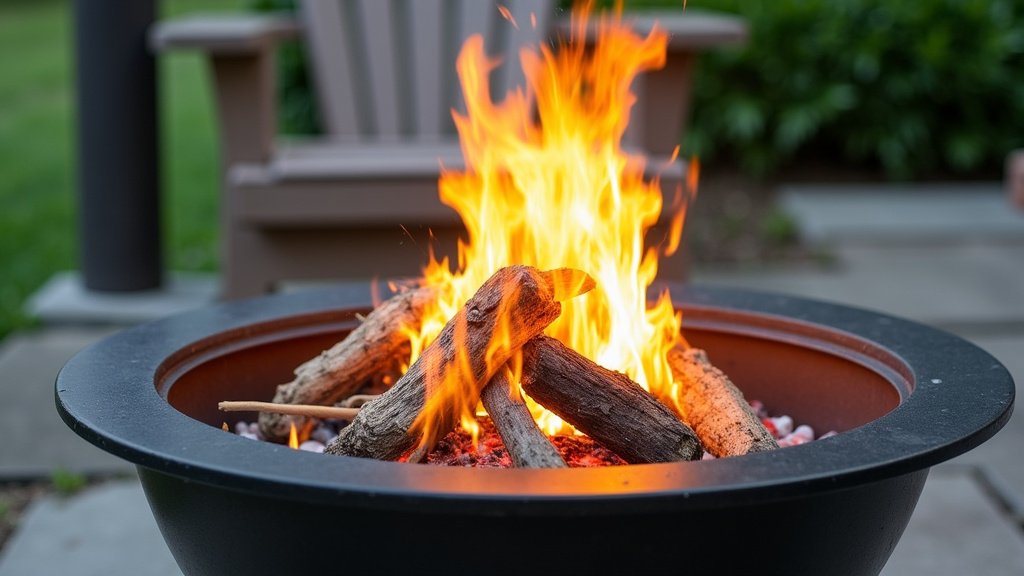
You’ve learned that the secret to enjoying your smokeless fire pit is all about the wood. For the cleanest burn, your go-to choices are dense hardwoods like oak, maple, and hickory. These burn longer and hotter, producing minimal smoke. Remember, properly seasoned wood is non-negotiable; it significantly reduces moisture and smoke. Avoid softwoods and fresh-cut logs. Now, you’re ready to pick the perfect logs for your next cozy, smoke-free evening.
Frequently Asked Questions
Can I burn any seasoned hardwood in my smokeless fire pit?
Yes, generally, any properly seasoned hardwood will work well. Oak, maple, and hickory are top-tier choices due to their density and burn characteristics. Other good options include ash, apple, and cherry. The key is ensuring the wood is seasoned for low moisture content.
How can I tell if firewood is properly seasoned?
Seasoned wood typically has cracks on the ends, feels lighter, and makes a hollow sound when tapped. Its bark might be loose or peeling, and it will have an earthy smell rather than a strong sap odor. A moisture meter can also give you a precise reading, aiming for 20% or less.
Why do softwoods like pine produce so much smoke?
Softwoods are less dense and contain higher resin content. When burned, these resins vaporize quickly, creating more smoke. They also burn much faster than hardwoods. While they ignite easily, they don’t provide the long, clean burn that smokeless fire pits are designed for.
Is it okay to burn mixed hardwoods?
Burning a mix of seasoned hardwoods is perfectly fine and can be a great way to use up different types of wood. As long as each piece is dense, dry, and has been properly seasoned, you’ll still achieve a cleaner, more enjoyable burn compared to using softwoods or unseasoned wood.
What happens if I burn unseasoned wood in my smokeless fire pit?
Burning unseasoned or “green” wood is the main cause of excessive smoke in any fire pit, including smokeless ones. The high moisture content causes the fire to smolder, producing thick smoke and less heat. It can also lead to creosote buildup, which is undesirable.