Is It Safe to Use a Fire Pit Under a Covered Patio?
On this page (8 sections)
Using a fire pit under a covered patio is generally not recommended due to fire and carbon monoxide risks. While the idea of cozy outdoor living is appealing, the enclosed space can trap dangerous fumes and allow flames to spread quickly to the overhead structure. Safety should always be your top priority when enjoying an outdoor fire.
We’ve researched this extensively and found that most fire pit manufacturers and fire safety organizations strongly advise against enclosed installations. The risks involve not only your immediate safety but also potential damage to your home. Understanding these hazards is key to enjoying your patio space safely and responsibly.
- Fire pits under covered patios pose significant fire risks.
- Carbon monoxide buildup is a serious, potentially deadly hazard.
- Many fire pit designs are not meant for enclosed spaces.
- Always check local fire codes and manufacturer guidelines.
- Prioritize safety over convenience for outdoor fires.
Let’s break down exactly why this setup is so risky and what safer alternatives you might consider for your covered patio.
Understanding the Risks of Patio Fire Pits
So, you’re dreaming of cozy evenings with a fire feature on your beautiful covered patio. It sounds lovely, right? You imagine a warm glow, the gentle crackle, and a perfect spot for gathering friends. But before you light that first match, we need to talk about safety. Using a fire pit under a covered patio presents some serious hazards.
We’ve researched this extensively, and the consensus from fire safety experts and manufacturers is clear: it’s generally not a safe idea. The overhead cover, while providing shelter, creates an enclosed space. This space can trap dangerous gases and increase the risk of fire spreading quickly. Your safety and the integrity of your home are far too important to take chances.
The Dangers of Carbon Monoxide Buildup
One of the most significant risks of using a fire pit in a covered, unventilated space is carbon monoxide (CO) poisoning. When fuels like wood or propane burn, they produce carbon monoxide. This gas is odorless, colorless, and deadly. In an open area, CO dissipates into the air.
However, under a patio cover, the CO can build up to dangerous levels. It has nowhere to go. Even a small fire pit can produce enough CO to make you sick. Symptoms can include headaches, dizziness, and nausea. If exposure continues, it can lead to unconsciousness and death.
Many experts, including those at the National Fire Protection Association (NFPA), strongly advise against any indoor or semi-enclosed use of devices that produce carbon monoxide. They stress that proper ventilation is key for any combustion appliance. Your covered patio, by its nature, often lacks the adequate ventilation needed.
Fire Hazards: Heat and Flames
Beyond the invisible threat of CO, there’s the very visible danger of fire. Fire pits generate intense heat. This heat can rise and come into direct contact with the overhead structure of your patio cover. Materials used for patio covers, such as wood or vinyl, are often flammable.
Even with screens or spark arrestors, sparks and embers can escape. These glowing pieces can easily ignite dry materials or fabrics nearby. Under a covered patio, the heat and sparks are contained. This means a small spark can quickly become a large, uncontrollable fire.
We found that most fire pit manufacturers explicitly state in their manuals that their products should not be used under overhangs or covered structures. They design their pits for open-air environments. Attempting to use them in an enclosed space voids warranties and, more importantly, creates an unacceptable risk.
Types of Fire Pits and Their Suitability
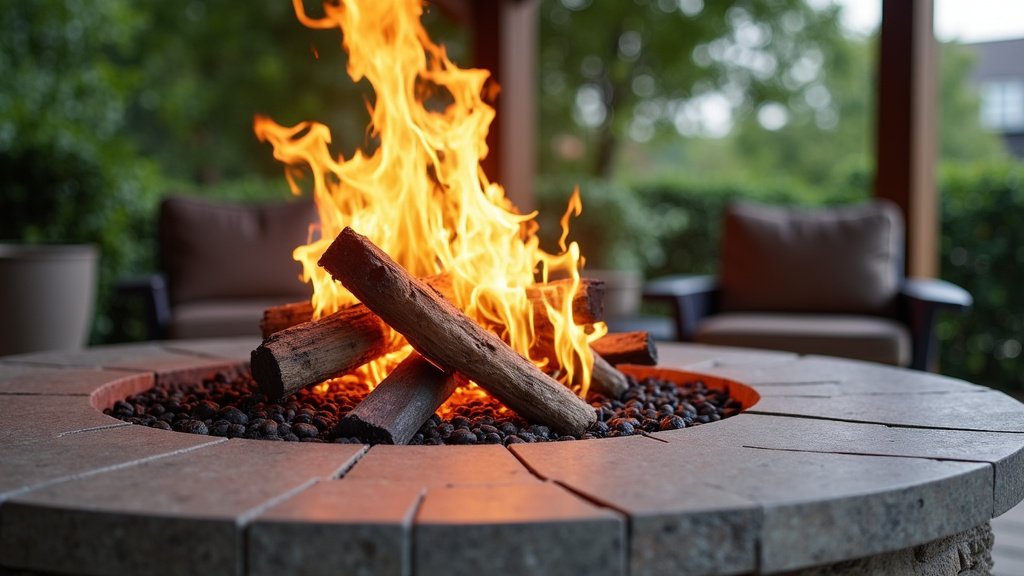
Not all fire pits are created equal, but the fundamental principles of combustion remain the same. Whether you have a wood-burning fire pit, a propane gas fire pit, or a charcoal grill, the risks under a covered patio persist.
Wood-Burning Fire Pits
Wood-burning fire pits produce the most smoke and sparks. The flames can be larger and less predictable than gas. The intense heat from burning logs can easily scorch or ignite overhead materials. The amount of carbon monoxide produced is also substantial.
Propane and Natural Gas Fire Pits
While gas fire pits produce less smoke and fewer sparks, they still generate carbon monoxide. The flames, though often contained within the unit, can still flare up unexpectedly. If the gas line or connection leaks, it creates an additional fire hazard. Proper ventilation is still absolutely essential.
Chiminea-Style Fire Pits
Some people consider chimineas, which have a chimney designed to direct smoke upward. While they are better than open fire pits for smoke management, they are still not designed for use under a solid overhead structure. The chimney might direct some smoke, but heat and stray sparks can still be a problem. Moreover, the structure of the chiminea itself can become extremely hot, posing a risk to the patio cover if placed too close.
Checking Local Regulations and Manufacturer Guidelines
Before you even think about setting up a fire pit, it’s crucial to know your local laws. Fire codes vary significantly by city and county. Many municipalities have specific regulations regarding outdoor burning, including where fire pits can be placed.
Using a fire pit under a covered patio might be outright prohibited by local ordinance. You could face fines or other penalties if you don’t comply. It’s always wise to check with your local fire department or building code office. They can provide the most accurate information for your area.
In addition to local laws, always consult the owner’s manual for your specific fire pit. Manufacturers provide safety instructions based on their product’s design. These guidelines are there for a reason – to protect you and your property. Ignoring them is a recipe for disaster.
Safer Alternatives for Your Covered Patio
The good news is that you don’t have to give up on creating a cozy atmosphere on your covered patio. There are safer ways to enjoy the ambiance of a fire without the risks associated with traditional fire pits.
Electric Fireplaces
Electric fireplaces are a fantastic option for covered patios. They provide the visual appeal of flames without any actual combustion. This means no carbon monoxide and no real fire risk. They require a standard electrical outlet and can often provide supplemental heat.
Many electric fireplaces are designed for outdoor use and are weather-resistant. You can find various styles, from wall-mounted units to freestanding models that mimic the look of a traditional fireplace. They are easy to install and operate. It’s a worry-free way to enjoy a warm glow.
Outdoor-Rated Electric Heaters
If your primary goal is warmth, consider outdoor-rated electric heaters. These devices are specifically designed for patio use and don’t involve flames. They are safe to use under covered patios and can effectively extend the usability of your outdoor space into cooler weather. If your primary goal is warmth, consider outdoor-rated electric heaters that are safe to use under covered patios.
Infrared heaters, for example, provide radiant heat that warms people directly. They are energy-efficient and do not produce any harmful emissions. Just ensure they are rated for outdoor use and follow the manufacturer’s installation instructions.
Tabletop Fire Features (Use with Caution)
There are small, tabletop fire features that use isopropyl alcohol or gel fuel. While they don’t produce carbon monoxide like wood or gas, they still involve real flames. If you choose to use one of these, you must be extremely vigilant.
Always use them on a stable, heat-resistant surface away from any flammable materials. Ensure there is plenty of clearance above and around the unit. Never leave them unattended. We found that even these smaller flame sources can pose a fire risk if mishandled under a covered patio. Constant supervision is key.
Creating a Safe Outdoor Fire Experience
If you are set on having a fire feature and your patio cover is not suitable, consider placing your fire pit in an open area of your yard. Here are some general safety tips for any outdoor fire:
- Always keep a fire pit at least 10-25 feet away from your home, deck railings, fences, trees, and any other structures.
- Ensure the ground beneath the fire pit is non-combustible, like gravel or concrete.
- Never leave a fire unattended, especially when children or pets are around.
- Keep a fire extinguisher, water hose, or bucket of sand nearby.
- Burn only appropriate materials. Avoid treated wood or trash.
- Allow the fire pit to cool completely before moving or cleaning it.
These steps can help ensure you enjoy the warmth and ambiance of an outdoor fire safely. Remember, the goal is to relax and have fun. Taking these precautions helps make that possible.
Conclusion
As you’ve seen, placing a fire pit under a covered patio introduces serious risks of carbon monoxide buildup and fire hazards. While the idea is tempting, the enclosed space compromises safety. We’ve researched this extensively, and the consensus from fire safety experts is clear: traditional fire pits are best suited for open, well-ventilated areas.
Prioritize your safety and your home’s integrity. Consider safer, flame-free alternatives like electric fireplaces or heaters to create that cozy ambiance on your patio. Before making any decisions, always check local fire codes and your fire pit’s manufacturer guidelines for responsible enjoyment.
Frequently Asked Questions
Can I use a propane fire pit under my covered patio?
No, propane fire pits are still not recommended under covered patios. While they produce less smoke than wood-burning options, they still emit dangerous levels of carbon monoxide. The enclosed space can trap this odorless gas, creating a deadly situation.
What is the minimum safe distance for a fire pit from a patio cover?
Most manufacturers and fire safety experts recommend keeping fire pits at least 10 to 25 feet away from any structures, including patio covers and railings. This distance allows for adequate ventilation and reduces the risk of heat or sparks igniting the overhead structure.
Are electric fire pits safe for covered patios?
Yes, electric fire pits are an excellent and safe option for covered patios. They use electricity to create the illusion of flames without any combustion. This means no carbon monoxide production and no actual fire risk, making them ideal for enclosed spaces.
What if my patio cover is made of non-combustible material?
Even with a non-combustible patio cover, using a fire pit underneath is generally not advised. The primary concern shifts from igniting the cover to the buildup of toxic carbon monoxide gas. Proper ventilation is still essential for any device that produces combustion byproducts.
How can I tell if there’s dangerous carbon monoxide buildup?
Carbon monoxide is odorless and colorless, making it impossible to detect on your own. This is why proper ventilation is critical. If you experience symptoms like headaches, dizziness, nausea, or flu-like feelings while a fire is burning nearby, leave the area immediately and seek fresh air.