Can You Use a Tent Stove in a Regular Tent?
On this page (8 sections)
- Can You Safely Put a Wood Stove in a Standard Tent?
- Understanding the Risks: Fire and Carbon Monoxide
- What Makes a Tent “Stove-Ready”?
- Modifying a Regular Tent: Is it Even Possible?
- Essential Safety Gear and Practices (If You’re Determined)
- The Recommended Approach: Using a Purpose-Built Tent
- Conclusion
- Frequently Asked Questions
You might be wondering, can you use a tent stove in a regular tent? The short answer is: generally, no, not without significant modifications and safety precautions. While it might seem like a cozy idea for camping, putting a tent stove directly into a standard tent poses serious fire and carbon monoxide risks. You absolutely need a tent specifically designed for stove use or to implement extreme safety measures.
Many campers dream of the warmth and ambiance a wood stove can bring to their tent. It’s true, these stoves can make even the coldest nights feel comfortable. However, the risk of fire is very real. Standard tents are usually made of flammable materials, and the exhaust from a stove can reach extremely high temperatures, making a fire hazard a major concern for any outdoor adventure.
- Tent stoves are generally not safe for regular tents.
- Specialized tents designed for stoves are required.
- Fire and carbon monoxide poisoning are major risks.
- Always prioritize safety and ventilation.
So, let’s walk through exactly what you need to know about using a tent stove safely, and what kind of setup is actually required.
Can You Safely Put a Wood Stove in a Standard Tent?
So, you’re dreaming of those toasty winter camping trips, complete with the crackle of a fire and the warmth of a wood stove right in your tent. It sounds idyllic, doesn’t it? Well, we need to talk about safety first. Can you use a tent stove in a regular tent? The straightforward answer is almost always no, unless you’re prepared for some serious, specialized modifications and a constant, vigilant approach to safety. Your everyday camping tent is simply not designed for the intense heat and exhaust a stove produces.
Think of it this way: a regular tent is mostly made of synthetic fabrics designed to keep the rain out, not to withstand the kind of radiant heat a wood stove throws off. It’s a bit like trying to use a regular oven mitt to handle a welding torch – it’s just not built for the job. The risks involved are substantial, and frankly, not worth a potential camping disaster.
Understanding the Risks: Fire and Carbon Monoxide
Let’s get right down to the nitty-gritty: fire and carbon monoxide. These are the two biggest reasons why putting a wood stove in a standard tent is a recipe for disaster.
The Flammable Nature of Your Tent
Most tents are constructed from materials like nylon or polyester. While these are great for keeping you dry and blocking wind, they are also highly flammable. A stray spark or a piece of ash that escapes the stove can quickly ignite the tent fabric. The result? A fire that can spread with alarming speed, especially in a confined space.
We found that even small embers can pose a significant threat. The high temperatures from a wood stove, especially the chimney pipe, can easily exceed the ignition point of these materials. You might think a little distance is enough, but heat radiates, and flammable materials can become dangerously hot without even touching the flame.
The Invisible Danger: Carbon Monoxide
This is a silent killer. When wood burns, it produces carbon monoxide (CO) gas. This gas is colorless and odorless, meaning you can’t see, smell, or taste it. If your tent isn’t properly ventilated, CO can build up to deadly levels inside. Symptoms can include headaches, dizziness, nausea, and confusion, which can quickly lead to unconsciousness and death.
The Centers for Disease Control and Prevention (CDC) highlights that carbon monoxide poisoning can occur quickly in enclosed spaces. This is why proper ventilation is non-negotiable. Standard tents, even with windows open, are often not designed to provide the kind of continuous, controlled airflow needed when operating a combustion appliance like a tent stove. We found that even a small amount of CO build-up is dangerous.
What Makes a Tent “Stove-Ready”?
Okay, so if your regular tent isn’t suitable, what kind of tent is? These are specialized tents, often called “hot tent” or “canvas wall tents.” They are specifically designed with safety features to accommodate a tent stove. For safe assembly, follow our tent stove setup guide.
The Role of Material and Design
These specialized tents are usually made from fire-resistant materials, most commonly canvas. Canvas, especially when treated, is much more resistant to sparks and flames than synthetic tent fabrics. It’s not completely fireproof, but it offers a much higher level of safety.
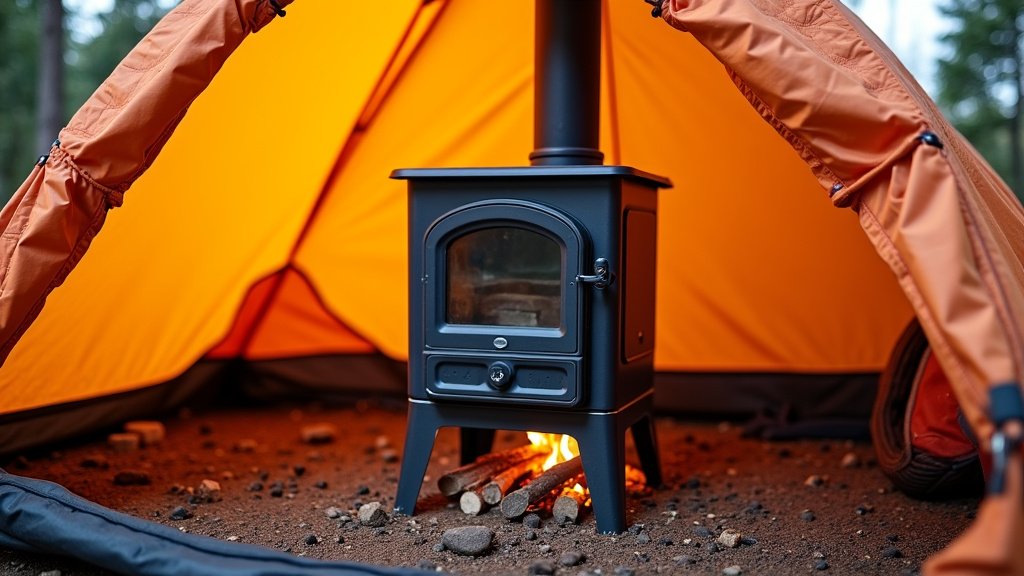
More importantly, these tents have integrated features for stovepipe chimneys. This usually involves a reinforced opening with a special flashing or collar. This collar is designed to safely pass the hot stovepipe through the tent wall, preventing direct contact with the flammable fabric and minimizing fire risk.
Ventilation Features Built-In
Beyond the chimney opening, stove-ready tents often have superior ventilation systems. They might include adjustable vents or mesh panels that can be opened and closed. This allows you to control airflow to manage the stove’s burn rate and, crucially, to ensure fresh air circulates constantly to prevent CO buildup. The design prioritizes safe air exchange.
| Feature | Regular Tent | Stove-Ready Tent |
|---|---|---|
| Primary Material | Nylon, Polyester (Flammable) | Canvas, Fire-Treated Canvas (Flame-Resistant) |
| Chimney Integration | None; requires risky modifications | Integrated, reinforced chimney port with flashing |
| Ventilation | Basic windows/vents; often insufficient for stove | Designed for controlled airflow; robust ventilation options |
| Heat Tolerance | Very Low; high fire risk | Much Higher; designed to manage stove heat |
Modifying a Regular Tent: Is it Even Possible?
You might be thinking, “Can I just cut a hole and install a stovepipe adapter in my current tent?” While people have attempted this, we strongly advise against it. The risks are substantial, and it’s incredibly difficult to achieve the necessary safety standards.
The Chimney Hole Problem
Cutting a hole in your tent for a stovepipe is the first hurdle. You’d need to create a fireproof barrier around the opening where the pipe exits. This involves specialized stovepipe flashing kits designed for tents. These kits are made from materials like silicone or fiberglass to withstand high temperatures. Without this, the heat from the pipe will melt or ignite your tent fabric very quickly.
We’ve seen many DIY attempts, and often, they don’t account for the extreme radiant heat or the potential for sparks to escape. It requires precise measurements and the right materials, and even then, it’s a gamble. The National Fire Protection Association (NFPA) recommends strict clearances for heating appliances, which are hard to maintain in a makeshift setup.
Achieving Adequate Ventilation is Tricky
Even if you manage the chimney, ventilation is still a major challenge. You need a constant flow of fresh air to prevent carbon monoxide poisoning. This means having multiple openings for air to enter and exit, creating a draft that pulls the CO out. Simply opening a door or window might not be enough, especially on a still, cold day.
You’d need to strategically place vents or open different parts of the tent to ensure air moves through. This can be difficult to manage, especially in bad weather. You don’t want to create so much ventilation that your tent becomes freezing cold, but you absolutely must have enough to keep the air safe. It’s a delicate balance that standard tents aren’t designed to handle.
Essential Safety Gear and Practices (If You’re Determined)
If, after understanding the risks, you are still considering using a tent stove, you must equip yourself with the right safety gear and implement rigorous practices. This is not a situation where you want to cut corners.
Carbon Monoxide Detector is Non-Negotiable
A battery-operated carbon monoxide detector is an absolute must-have. Do not even think about using a stove without one. Place it strategically in your tent where you sleep, away from the immediate heat of the stove. Test it regularly to ensure the batteries are working.
Many experts, including those at the National Institutes of Health (NIH), emphasize the importance of CO detectors in any home or living space where combustion occurs. Your tent, when using a stove, becomes such a space. We found that a detector can provide an early warning, giving you precious time to react.
Fire Extinguisher and Water Source
You must have a fire extinguisher readily accessible inside your tent at all times. Know how to use it! Additionally, having a bucket of water or sand nearby can be a lifesaver in case of small fires or embers.
Remember, fires can start in seconds. Being prepared to act immediately is crucial. Your ability to put out a small fire quickly can prevent a much larger, more dangerous situation. Having water available is a simple but effective safety measure.
Proper Stove Installation and Clearances
If you manage to safely integrate a stovepipe system, you still need to maintain proper clearances around the stove itself. This means ensuring no flammable materials (sleeping bags, clothing, fuel containers) are too close to the stove or the hot stovepipe. Follow the manufacturer’s recommendations for your specific stove.
Many stove manufacturers specify a minimum distance to combustible materials. This is often 36 inches or more. You’ll need to ensure your tent setup allows for these clearances. It might mean setting up the stove in the center of a very large tent or having designated “no-flammable-items” zones. This is a key safety requirement.
The Recommended Approach: Using a Purpose-Built Tent
Given the significant risks associated with using a tent stove in a regular tent, the overwhelming recommendation from camping safety experts and manufacturers is to use a tent specifically designed for this purpose.
Investing in a Hot Tent
These tents, often made of canvas and featuring integrated stovepipe ports, are built from the ground up with safety in mind. They provide the necessary fire resistance and controlled ventilation to make using a tent stove a much safer experience.
While they represent a larger initial investment, the peace of mind and safety they offer are, in our view, well worth it. You’re not just buying a tent; you’re investing in a safe way to enjoy a unique camping experience. The specialized design addresses the core safety concerns that standard tents simply cannot.
Proper Stove Selection and Use
Once you have a suitable tent, choose a tent stove designed for camping. These are typically smaller, portable units with efficient burn rates. Always follow the manufacturer’s instructions for setup, operation, and maintenance. Never leave a lit stove unattended, especially overnight.
A checklist can help ensure you don’t miss any critical steps:
- Always use a carbon monoxide detector.
- Ensure your tent has a proper stovepipe port.
- Maintain safe clearances around the stove and pipe.
- Have a fire extinguisher and water/sand readily available.
- Ventilate your tent properly at all times.
- Never leave a lit stove unattended.
Conclusion
Using a tent stove in a regular tent isn’t a safe camping choice. The risk of fire from flammable materials and deadly carbon monoxide buildup is far too high. Your standard tent simply isn’t designed for the heat and exhaust a stove produces. We strongly advise against attempting to modify a regular tent for stove use.
Instead, for cozy warmth and safety, invest in a specialized “hot tent.” These are built with fire-resistant materials and proper ventilation systems. Prioritize your safety and the safety of your campsite by using purpose-built gear. Your next step should be researching and purchasing a tent designed for stove use.
Frequently Asked Questions
Is a carbon monoxide detector truly necessary with a tent stove?
Yes, a battery-operated carbon monoxide detector is absolutely essential. When any fuel burns, it produces this odorless, colorless gas. Even with ventilation, CO can build up to dangerous levels quickly. A detector provides a critical early warning system for your safety.
Can I use an electric heater instead of a wood stove in a regular tent?
Electric heaters are generally safer for regular tents than wood stoves because they don’t produce combustion byproducts like carbon monoxide. However, ensure your tent has adequate ventilation and you have a safe power source. Always check the heater’s wattage and your power capacity to avoid overloading circuits.
How far should a tent stove be from the tent walls?
This depends on your specific stove and tent, but safety guidelines typically recommend significant clearances. Many manufacturers suggest at least 36 inches from combustible materials. Specialized tents designed for stoves have reinforced stovepipe ports to manage heat safely.
What are the best materials for a tent designed for a stove?
Canvas, especially fire-treated canvas, is the preferred material for tents designed to accommodate stoves. Canvas is much more resistant to sparks and high heat than synthetic fabrics like nylon or polyester. It offers a higher level of protection against fire hazards.
How do I ensure proper ventilation when using a tent stove?
Stove-ready tents often have built-in, adjustable ventilation systems. You need a constant flow of fresh air to prevent carbon monoxide buildup and manage the stove’s burn rate. Open vents, windows, or doors strategically to create airflow, ensuring you balance ventilation with maintaining warmth.