How to Keep a Fire Pit from Smoking?
On this page (7 sections)
The easiest way to keep a fire pit from smoking is to use seasoned hardwood and ensure your fire pit has adequate airflow. Burning dry, well-cured wood is key. Wet or unseasoned wood produces more smoke because the moisture needs to escape. Proper ventilation allows smoke to rise and dissipate effectively. You can also manage smoke by building the fire correctly.
Dealing with smoky fires can be frustrating, turning a relaxing evening into an eyesore. Many factors contribute to smoke, from the type of fuel you use to the design of your fire pit itself. Understanding these elements helps you create a more enjoyable, smoke-free experience. It’s all about choosing the right materials and setting up your fire pit for success.
- Use dry, seasoned hardwood for less smoke.
- Ensure your fire pit has good airflow.
- Build your fire properly to manage smoke.
- Consider fire pit design for better smoke control.
Let’s walk through exactly how to get your fire pit burning bright without the bothersome smoke.
Making Your Fire Pit Smoke Less
Nobody likes sitting in a cloud of smoke. It stings your eyes and ruins the ambiance. Fortunately, you can significantly reduce smoke from your fire pit with a few smart choices. It really comes down to the fuel you burn and how you manage your fire.
The Fuel: What You Burn Matters Most
The biggest culprit for a smoky fire is often the wood itself. What you choose to burn has a huge impact on how much smoke you’ll get.
Choosing the Right Kindling and Logs
You want to use seasoned hardwood. This means the wood has been dried for at least six months, often longer. Seasoned wood has a much lower moisture content. This allows it to burn hotter and cleaner, producing less smoke. Think of it like a dry sponge versus a wet one; the dry one will burn, the wet one will just sputter and steam.
Hardwoods like oak, maple, and hickory are excellent choices. They burn longer and produce fewer sparks than softwoods. Softwoods, like pine or fir, tend to be resinous. They burn quickly and create a lot of smoke and creosote. While great for starting a fire, they aren’t ideal for keeping a steady, low-smoke burn.
Why Unseasoned Wood is a Smoky Nightmare
If your wood is still damp or “green,” it will produce a lot of smoke. This is because the fire has to first boil off the excess water before it can burn the wood efficiently. This process creates steam and incomplete combustion, which is smoke. We found that wood with a moisture content above 20% will smoke considerably (USDA Forest Products Laboratory).
You can check if your wood is seasoned by looking for cracks at the ends of the logs. They should also sound hollow when knocked together, not dull. If your wood is difficult to light or seems to smolder more than burn, it’s likely too wet.
| Wood Type | Moisture Content (Ideal) | Smoke Level | Burn Time |
|---|---|---|---|
| Seasoned Hardwood (Oak, Maple, Hickory) | 15-20% | Low | Long |
| Seasoned Softwood (Pine, Fir) | 15-20% | Medium | Short |
| Unseasoned/Green Wood | >20% | High | Very Short (and smoky!) |
What NOT to Burn
Beyond unseasoned wood, avoid burning anything that isn’t specifically meant for a fire pit. Treated lumber, painted wood, or garbage release toxic fumes and a lot of unpleasant smoke. Even paper and cardboard, while used for kindling, should be used sparingly. They burn very quickly and can contribute to initial smoke.
Fire Pit Design and Airflow: Let the Fire Breathe
The design of your fire pit plays a massive role in how well it breathes and, therefore, how much smoke it produces. Airflow is everything for a clean burn.
Understanding the Importance of Ventilation
A fire needs oxygen to burn hot and complete its combustion cycle. If air can’t get to the fire properly, it will smolder and smoke. You want your fire pit to have adequate ventilation. This means allowing air to enter from the bottom and sides of the fire pit to feed the flames.
Many modern fire pits have built-in air vents or holes. These are designed to draw air in and help the fire burn more efficiently. If your fire pit lacks these, you might need to get creative, but more on that later.
How Design Affects Smoke Management
The shape and depth of your fire pit also matter. Deeper bowls can sometimes trap smoke. This makes it harder for the smoke to escape upwards. Fire pits with wider openings and perhaps a slight taper at the top can help smoke dissipate more easily. Some designs even incorporate smoke-reducing rings or baffles.
We found that fire pits with airflow systems designed to direct air upwards toward the flame base were most effective at reducing smoke. This is similar to how some advanced wood stoves work, ensuring more complete combustion. Our guide explains how fire pits with effective airflow systems can reduce smoke.
Building a Better Fire to Reduce Smoke
Even with the best wood and a well-designed pit, how you build your fire can make a difference. A proper fire structure helps it get hot quickly and burn cleanly.
Starting Smart: The Role of Kindling and Tinder
Begin with plenty of dry tinder and small pieces of kindling. This helps establish a hot base quickly. A hot fire is a less smoky fire. Once you have a good flame going, gradually add larger pieces of your seasoned hardwood.
Don’t smother the flames with too much wood too soon. Give each piece a chance to catch and burn well before adding more. Think of it as feeding a baby bird – small, consistent portions.
Arranging Logs for Optimal Airflow
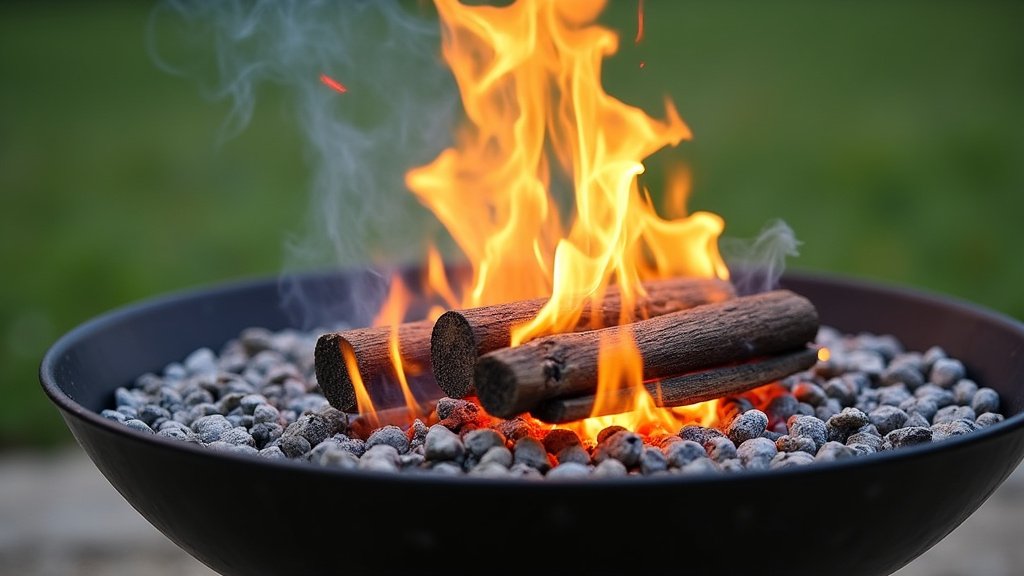
How you stack your wood is important. Don’t just pile it in haphazardly. Leave space between the logs for air to circulate. A common and effective method is a criss-cross pattern or a log cabin style. This allows oxygen to reach multiple sides of the wood as it burns.
Ensuring the fire has access to air from beneath is also key. Some people use fire starters or small grates to lift the wood slightly off the bottom of the pit. This simple step can dramatically improve airflow and reduce smoke.
The “Hot and High” Principle
Experts often refer to the principle of keeping your fire “hot and high.” A hot fire burns fuel completely. A high fire means the flames are reaching upwards, and the smoke is rising with them. If your fire is low and sputtering, the smoke tends to linger around the base and escape into your seating area.
This is where the seasoned wood and good airflow really pay off. If the flame still dies, see why a fire keeps going out. They allow you to achieve and maintain that hot, high burn.
Quick Checklist for a Smoke-Free Fire Pit Experience
Here’s a quick rundown of what to do:
- Use only seasoned hardwood. Ensure it’s dry and cured.
- Check your fire pit’s airflow. Make sure vents are clear.
- Build your fire with space. Allow air to circulate between logs.
- Start with plenty of tinder and kindling. Get it hot fast.
- Don’t overload the pit. Add wood gradually.
- Burn only approved materials. No trash or treated wood.
Conclusion
Keeping your fire pit from smoking is totally achievable with a few smart strategies. By focusing on using seasoned hardwood and ensuring your fire pit has excellent airflow, you’re setting yourself up for a much cleaner burn. Remember, a hot fire made with dry wood and proper ventilation is your best defense against smoke. Don’t forget to stack your wood thoughtfully and start with a robust base of kindling. Now, go ahead and build that perfect, low-smoke fire for your next outdoor gathering!
Frequently Asked Questions
How can I tell if my firewood is properly seasoned?
Seasoned firewood typically has cracks at the ends of the logs. It should also sound hollow when knocked against another log, not dull. If it’s hard to light or smolders excessively, it’s likely not dry enough.
What’s the best way to improve airflow in an older fire pit?
If your fire pit lacks built-in vents, you can try using a small metal grate to lift the wood slightly off the bottom. This simple lift allows air to circulate underneath the logs.
Can I use softwood kindling to start my fire, even if I’m using hardwood logs?
Yes, using dry softwood kindling to get your fire started is perfectly fine. The key is to transition to your seasoned hardwood logs once you have a good, hot base going.
Why does my fire pit smoke so much even with dry wood?
If you’re using dry wood but still experiencing smoke, it’s likely an airflow issue. Your fire pit might not be getting enough oxygen to burn efficiently, causing it to smolder.
Are there any specific fire pit designs that are better at reducing smoke?
Yes, fire pits with wide openings and designs that incorporate vents or baffles can be more effective. These features help direct air to the flames and allow smoke to dissipate more easily.