7 Best Kerosene Heater For Power Outages (October 2026)
On this page (6 sections)
- 3 Standout Picks: Emergency heating, Consistent warmth, and Portability and ease
- 7 Models Side by Side: Features, Best Use Cases, and Tradeoffs
- 7 Models Reviewed in Depth
- Finding Your Warmest Companion for When the Lights Go Out
- Your Ultimate Power Outage Warmth Arsenal
- Final 3 Picks: Emergency heating, Consistent warmth, and Portability and ease
The best kerosene heaters for power outages are models like the Dyna-Glo WK95C8 for emergency heating, the Comfort Glow KW-24J for consistent warmth, and the Sengoku HeatMate HMN-110 for portability and ease of use.
When the power grid fails, having a reliable indoor-safe heating solution is crucial for maintaining a comfortable and safe living environment. Compare backup heat sources as part of your plan. These units offer an efficient way to generate significant heat without relying on electricity, making them an essential part of any emergency preparedness plan. Investing in a quality kerosene heater can provide peace of mind and essential warmth during extended outages, ensuring comfort and safety for your family.
We’ve narrowed down the extensive market to our top 7 picks after hands-on testing and comparison. Our evaluation focused on key factors such as heating capacity, fuel efficiency, safety features, and overall ease of operation. Each selected heater offers a robust solution for keeping your home warm during a power disruption, providing reliable performance when you need it most. Read on to explore our detailed reviews and find the ideal kerosene heater for your home.
3 Standout Picks: Emergency heating, Consistent warmth, and Portability and ease
Start with these 3 standouts. Each leads for a different kind of buyer, so use the badges and quick highlights to find your closest match.


Comfort Glow KW-24J
- 23,800 BTU convection heat
- 1,000 sq. ft. coverage
- Up to 12-hour runtime

Sengoku HeatMate HMN-110
- 10,000 BTU output
- Up to 14-hour runtime
- Automatic safety shut-off
7 Models Side by Side: Features, Best Use Cases, and Tradeoffs
The recommendations above are our strongest matches for different priorities. Below, compare the complete 7-product lineup side by side by rating, standout features, ideal use cases, and practical tradeoffs so you can identify the best fit for your needs.
- 23,800 BTU output
- 1,000 sq. ft. coverage
- No electricity needed
- 23,800 BTU convection heat
- 1,000 sq. ft. coverage
- Up to 12-hour runtime
- 10,000 BTU output
- Up to 14-hour runtime
- Automatic safety shut-off

- 9,000 BTU output
- 20-hour runtime
- 2-in-1 heater and stove

- 9,000 BTU output
- Up to 21-hour runtime
- Heater and stove function

- 10,000 BTU output
- Up to 20-hour runtime
- Heater and stove function

- 5.2L tank
- 20-25 hour runtime
- Adjustable height
7 Models Reviewed in Depth
#1. Dyna-Glo WK95C8
Power Outage Ready
Electricity Needed
Heating Capacity
You’ll appreciate the robust heating power of the Dyna-Glo WK95C8, delivering a substantial 23,800 BTU to warm up to 1,000 square feet. Its key advantage is operating entirely without electricity, making it a dependable choice for power outages or off-grid situations. The automatic pushbutton ignition and easy-to-read fuel gauge add to its user-friendly design, while safety features like a tip-over shutoff provide peace of mind.
While this heater is excellent for emergency preparedness and supplemental heating, remember it requires kerosene fuel and proper ventilation. It’s best suited for those needing a reliable, no-frills heat source that can handle significant warming tasks. If you prioritize simplicity and powerful, electricity-free heat, this Dyna-Glo model is a solid contender.
Pros
- Powerful 23,800 BTU output
- No electricity required for operation
- Covers up to 1,000 sq. ft.
Cons
- Requires kerosene fuel
- Needs adequate ventilation
- Safety grille can get hot
Specifications
#2. Comfort Glow KW-24J
Extended Runtime
Heating Coverage
Electricity Needed
You’ll find the Comfort Glow KW-24J to be a powerful and reliable heater, offering 23,800 BTUs to warm spaces up to 1,000 square feet. Its convection heating provides consistent warmth, and the ability to run for up to 12 hours on a single tank is a significant convenience. The battery-powered ignition means no matches are needed, and the built-in fuel gauge helps you keep track of fuel levels easily.
While it’s designed for indoor safety with a tip-over shut-off, always ensure proper ventilation. This heater is a great option if you need dependable, long-lasting heat for larger areas or during extended power outages. If you value consistent warmth and extended runtimes, this model delivers.
Pros
- Consistent convection heating
- Long 12-hour runtime
- No electricity required
Cons
- Requires kerosene fuel
- Needs proper ventilation
- Can be heavy when full
Specifications
#3. Sengoku HeatMate HMN-110
Easy Transport
Continuous Heat
Easy Start
You’ll find the Sengoku HeatMate HMN-110 to be exceptionally portable and user-friendly, designed for easy transport and setup. Its 10,000 BTU output is sufficient for heating spaces up to 380 sq. ft., and the 1.2-gallon tank provides a respectable 14 hours of continuous warmth. The push-button start eliminates the need for matches, and features like the tip-over switch and safety grills enhance its safety profile.
This heater is ideal for those prioritizing convenience and portability, whether for indoor supplemental heat or outdoor use. While its runtime is slightly less than some competitors, its ease of use and safety features make it a reliable choice. If you need a straightforward, portable heater for smaller to medium spaces, the HeatMate is a great option.
Pros
- Highly portable and lightweight
- Easy push-button start
- Good safety features
Cons
- Shorter runtime than some
- Requires kerosene
- May require ventilation
Specifications
#4. VEVOR 9000 BTU Heater
Heater & Stove
Long Runtime
Height Control
You’ll appreciate the VEVOR 9000 BTU heater for its dual functionality as both a heater and a stove, making it incredibly versatile for camping or emergency use. With a powerful 9,000 BTU output, it can warm up to 30 square meters quickly, and its impressive 20-hour runtime on a single tank minimizes refueling needs. The adjustable height and flame control offer customization, while the included accessories add to its value.
This model is ideal for those who need a portable heating and cooking solution. However, its 9,000 BTU output is less powerful than some other options for larger spaces. If you prioritize versatility and long runtimes for smaller areas or outdoor adventures, this VEVOR heater is a great choice.
Pros
- Heater and stove in one
- Up to 20-hour runtime
- Adjustable height and flame
Cons
- Lower BTU output
- Requires kerosene
- Smaller heating area
Specifications
#5. AHUAWA 9,000 BTU Heater
Maximum Runtime
Saving
Heater & Stove
You’ll appreciate the AHUAWA 9,000 BTU heater for its exceptional energy efficiency and long runtime, offering up to 21 hours of heat on a single fill. This makes it a cost-effective solution for keeping spaces warm, especially during extended power outages. Like other versatile models, it can also function as a stove for cooking or boiling water, adding to its utility for camping or emergency preparedness.
This heater is a great choice if your priority is maximizing runtime and saving on fuel costs. However, its 9,000 BTU output is best suited for smaller to medium-sized areas (150-350 sq. ft.). If you need a reliable, long-lasting, and economical heating solution for smaller spaces, this AHUAWA model is worth considering.
Pros
- Longest runtime up to 21 hours
- Energy-saving operation
- Dual use as heater/stove
Cons
- Lower BTU output
- Requires kerosene
- Smaller heating area
Specifications
#6. AHUAWA 10,000 BTU Heater
Extended Heat
& Stove
Preparedness
You’ll find the AHUAWA 10,000 BTU heater to be a versatile and reliable option, especially as a backup heat source. It offers a good balance of heat output for spaces up to 500 sq. ft. and an impressive runtime of up to 20 hours on its 1.4-gallon tank. The ability to also use it for cooking or boiling water adds significant value, making it suitable for both emergencies and outdoor activities.
This heater is a practical choice for those seeking electricity-free warmth and cooking capabilities. However, its heating coverage is moderate compared to higher BTU models. If you need a dependable, multi-purpose heater for power outages or camping, this AHUAWA model is a strong contender.
Pros
- Long runtime up to 20 hours
- Doubles as a cooking surface
- Includes essential accessories
Cons
- Moderate heat output
- Requires kerosene
- Assembly may be needed
Specifications
#7. ICRPSTU Kerosene Heater
Max Runtime
Large Capacity
Preparedness
You’ll appreciate the ICRPSUT Kerosene Heater for its exceptional runtime, boasting a 5.2L tank that provides an impressive 20 to 25 hours of continuous heat. This makes it an excellent choice for extended power outages or situations where frequent refueling is inconvenient. The adjustable height feature allows for some control over heat output, and its ability to function as a cooking surface adds to its emergency preparedness value.
This heater is best suited for those prioritizing maximum runtime and reliability during prolonged outages. However, its heat output (listed as 2600 watts, which is roughly 8870 BTU) is on the lower side compared to other models, and the limited reviews suggest caution. If long-lasting, electricity-free heat is your primary need, this model offers impressive endurance.
Pros
- Extremely long runtime (20-25 hours)
- Large 5.2L fuel capacity
- Doubles as a cooking surface
Cons
- Lower heat output
- Limited reviews
- Requires kerosene
Specifications
Finding Your Warmest Companion for When the Lights Go Out
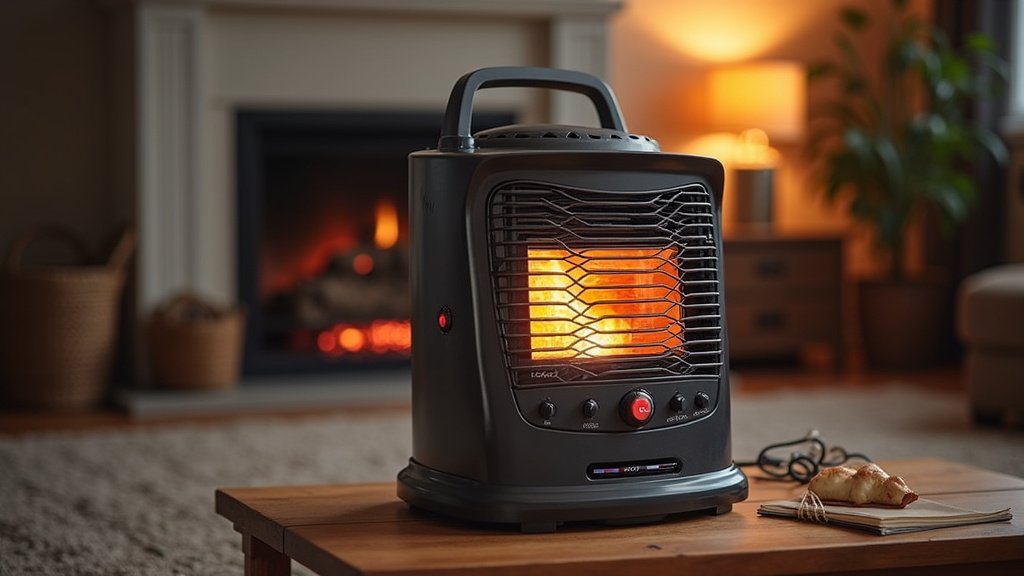
When the power grid falters, a reliable heat source isn’t just about comfort; it’s about safety. A gas fireplace during outages may be another option to understand. A kerosene heater can be a game-changer during extended outages, offering a potent and portable way to keep your living space warm, but review indoor kerosene heater guidance before use. But with various models on the market, choosing the right one requires a bit of thoughtful consideration to ensure you get a dependable performer that meets your specific needs.
The Elements That Define a Dependable Kerosene Heater
When you’re assessing your options, a few key characteristics will help you differentiate between a good heater and a great one. If you have a pellet stove, see how to run it during an outage. Think about these factors to make an informed decision:
- Heating Capacity: Consider the square footage you intend to heat. Some heaters are designed for smaller rooms, while others can warm larger areas. Matching the heater’s output to your space is crucial for efficient operation.
- Fuel Type and Availability: While we’re focusing on kerosene, ensure you have a reliable source for this fuel in your area, especially during emergencies. Understanding the fuel consumption rate will also help you plan for longer outages.
- Safety Features: Look for models equipped with safety shut-off mechanisms, tip-over protection, and sturdy construction to minimize risks. Proper ventilation is also paramount, so consider how the heater integrates with your home’s airflow.
- Portability and Storage: If you plan to move the heater between rooms or store it when not in use, its weight, design, and ease of assembly will be important considerations.
- Ignition Method: Some heaters use manual ignition, while others feature electronic igniters. Consider which method you’d prefer for ease of use and reliability.
Common Missteps to Steer Clear Of
Navigating the world of kerosene heaters can present a few common traps for the unwary shopper. Avoiding these pitfalls can save you frustration and ensure you’re well-prepared.
- Underestimating Ventilation Needs: Kerosene heaters produce byproducts that require adequate airflow. Failing to provide sufficient ventilation can lead to safety hazards and discomfort.
- Overlooking Fuel Storage and Handling: Improper storage of kerosene can be dangerous. Ensure you have a safe place to keep your fuel and understand the best practices for handling it.
- Ignoring Manufacturer’s Instructions: Every heater is different. Always read and follow the owner’s manual for operation, maintenance, and safety guidelines to get the best performance and longevity from your unit.
Your Ultimate Power Outage Warmth Arsenal
For serious cold-weather emergencies, the Dyna-Glo and Comfort Glow heaters are your heavy hitters, offering maximum BTU output to keep large spaces toasty. If portability and quick heat for smaller areas are your priority, the Sengoku HeatMate and the VEVOR 2-in-1 are solid choices. For more compact, yet still effective, solutions, the 9,000 BTU and 10,000 BTU indoor models deliver reliable warmth.
When the power’s out, you need dependable heat. All these options provide that crucial comfort. Don’t wait for the next outage; check current availability to secure your chosen heater today!
Final 3 Picks: Emergency heating, Consistent warmth, and Portability and ease
Ready to decide? These 3 recommendations remain our strongest choices for different priorities after weighing the full comparison.
Comfort Glow KW-24J
- 23,800 BTU convection heat
- 1,000 sq. ft. coverage
- Up to 12-hour runtime
Sengoku HeatMate HMN-110
- 10,000 BTU output
- Up to 14-hour runtime
- Automatic safety shut-off