9 Best Natural Gas Garage Heaters (November 2026)
The best natural gas garage heaters include the Mr. Heater for large garages with high ceilings, the ProCom Heating Natural Gas Ventless Infrared Plaque for compact radiant warmth, and the Comfort Glow for direct-vent wall installation.
On this page (4 sections)
The best natural gas garage heater for a larger workspace is the Mr. Heater 50,000 BTU forced-air unit, provided your ceiling is at least 10 ft high and it can maintain 8 ft of clearance below the heater.
For smaller garages, the wall-mounted radiant and direct-vent picks offer lower stated outputs and different installation needs. For plug-in models, compare 120V garage heaters.
A fixed natural gas supply can spare you from changing portable fuel cylinders, but it also makes installation planning central to the choice. For other fuel choices, compare propane and electric heaters.
Compare the heater's mounting style, venting, power needs and stated coverage with your garage before deciding.
If you’re still weighing fuel types, start with What Is the Best Heater for a Garage?. For portable fuel options, see Best Propane Heater For Garages and Best Kerosene Heater For Garages.
Our picks at a glance
-
1

-
2
 Best for compact radiant warmth
ProCom Heating Natural Gas Ventless Infrared Plaque
9.6/10 our score
See it on Amazon -
3

- 4
 Best for wall-mounted supplemental heatCheck it
- 5
 Check it
Modine HD45AS0111Natural Gas Hot Dawg Garage Heater
Best for a commercial-style garage unit - 6
 Check it
ProCom Heating Natural Gas Ventless Blue Flame
Best for a small adjustable wall heater - 7
 Check it
Heatstar By Enerco F125444 Radiant Overhead Garage
Best for radiant overhead heating - 8
 Check it
Rinnai FC824N Ventless Natural Gas Heater
Best for programmable temperature control - 9
 Best for a larger radiant wall heaterCheck it
How we chose these natural gas garage heaters
We compared each heater's stated fuel, heat output, coverage, mounting style and venting details against common garage needs. We also considered whether the product information describes garage use directly or points to a smaller residential room.
A high BTU number alone doesn't make a heater right for your space. Ceiling height, insulation, air leakage, vent route and the placement of vehicles or work areas all affect whether a model fits.
Our score weighs specs, features and buyer feedback against what you're shopping for. Before buying a fixed gas heater, confirm the exact model, clearances, gas connection and installation requirements with the manufacturer instructions and a qualified installer.
| Product | Best for | Heat output | Heating coverage | Mounting and clearance | Our score |
|---|---|---|---|---|---|
| Mr. Heater | large garages with high ceilings | 50,000 BTU | Up to 1,667 sq ft | Ceiling mount; 10 ft minimum ceiling, 8 ft floor clearance | 9.7 |
| ProCom Heating Natural Gas Ventless Infrared Plaque | compact radiant warmth | 10,000 BTU | Up to 500 sq ft | 9.6 | |
| Comfort Glow | direct-vent wall installation | 17,000 BTU | Up to 500 sq ft | 9.5 | |
| Mr. Heater | wall-mounted supplemental heat | 20,000 BTU | Up to 700 sq ft | 9.4 | |
| Modine HD45AS0111Natural Gas Hot Dawg Garage Heater | a commercial-style garage unit | 45,000 BTU | 9.2 | ||
| ProCom Heating Natural Gas Ventless Blue Flame | a small adjustable wall heater | 10,000 BTU | Up to 500 sq ft | 8.9 | |
| Heatstar By Enerco F125444 Radiant Overhead Garage | radiant overhead heating | 25,000 BTU per hour, as described | 8.7 | ||
| Rinnai FC824N Ventless Natural Gas Heater | programmable temperature control | 24,000 BTU | 8.4 | ||
| Comfort Glow | a larger radiant wall heater | 30,000 BTU | Up to 1,000 sq ft | 7.9 |
Which natural gas garage heater fits your space?
The best match depends on whether you need broad forced-air coverage, direct radiant warmth or a compact wall unit. Check the full product details below alongside your ceiling height and installation options.
Mr. Heater: Best for large garages with high ceilings
- 50,000 BTU forced-air heat
- Ceiling mounted
- Rated for up to 1,667 sq ft
- Minimum 10 ft ceiling height
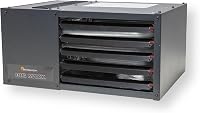
This ceiling-mounted forced-air unit is designed for garages, barns and workshops. It offers the largest stated heat output and coverage in this group, with a 10 ft minimum ceiling requirement.
Pros
- Largest stated coverage here
- Works with standard 24-volt or Wi-Fi enabled thermostats, sold separately
- High-temperature safety shut-off and flame sensor
Cons
- Requires a 10 ft minimum ceiling
- Needs 8 ft clearance from heater base to floor
- Requires 120-volt AC power
The Mr. Heater unit is the strongest fit here for a larger garage with room for a ceiling-mounted heater.
Compare ceiling-mounted garage heaters for more options.
It produces 50,000 BTU and is described for spaces up to 1,667 sq ft, including a garage of about three cars.
The forced-air fan spreads heat through the space, which can suit a workshop where people move between work areas. It works with standard 24-volt or Wi-Fi enabled thermostats, sold separately.
Measure the ceiling and floor clearance before considering it. The unit requires at least a 10 ft ceiling and 8 ft between its base and the floor, and it also needs 120-volt AC power.
Choose this model when broad coverage matters and the space meets those installation limits. If you have a lower ceiling or want heat directed at a smaller work zone, compare the radiant options below.
ProCom Heating Natural Gas Ventless Infrared Plaque: Best for compact radiant warmth
- 10,000 BTU infrared heat
- Up to 500 sq ft
- Thermostat control
- Wall mount or base feet
This compact natural gas infrared heater offers a choice of wall mounting or floor placement. Its stated residential use and 500 sq ft coverage make it more suited to a small area than a whole large garage.
Pros
- Wall hardware and base feet included
- Thermostat has high, medium and low settings
- No electricity required
Cons
- Smaller stated coverage than the larger garage units
- Designed for residential use
The ProCom infrared plaque heater suits a smaller space where radiant heat and flexible placement are useful. Its stated output is 10,000 BTU, with coverage up to 500 sq ft.
You can mount it on a wall with the included hardware or place it on the floor using its included base feet. The heater has high, medium and low thermostat control, and it does not require electricity.
ProCom describes this model for residential rooms such as offices and bedrooms. Check its manual and local rules before using it in a garage, especially if you plan to keep fuel, vehicles or other materials nearby.
Pick it for a compact area where its mounting choices help with layout. For a direct-vent wall unit, consider the Comfort Glow below.
Comfort Glow: Best for direct-vent wall installation
- 17,000 BTU direct-vent heat
- Thermostatic control
- Wall mounted
- Vent kit included
The direct-vent design sends exhaust through the wall and includes a vent kit. It suits a smaller garage where a wall installation and vent opening are practical.
Pros
- Includes heat shield, vent pipe, intake pipe, vent cap and flashing
- Electronic ignition and safety pilot
- Does not require electricity
Cons
- Coverage is stated at up to 500 sq ft
- Requires a compatible wall installation
The Comfort Glow direct-vent heater is a strong option when you can install a wall vent and want combustion sealed from the room. It produces 17,000 BTU and is described for areas up to 500 sq ft.
Its kit includes a heat shield, vent pipe, air intake pipe, vent cap, flashing and connection rod. The heater mounts to a wall and fits walls from 4.5 to 10 inches thick.
Electronic ignition, a safety pilot and a built-in pressure regulator are among its stated features. The model is also described as operating without electricity, though you should confirm the setup details with a qualified installer.
Choose it when direct venting works for your garage and the stated coverage fits the area. The included kit doesn't remove the need to check wall construction, clearances and local installation rules.
Mr. Heater: Best for wall-mounted supplemental heat
- 20,000 BTU radiant heat
- Up to 700 sq ft
- Built-in thermostat
- No electricity required
This vent-free radiant model combines a built-in thermostat with wall mounting. Its stated coverage is a fit for a smaller garage or a defined work area.
Pros
- Electronic ignition
- Built-in thermostat control
- Low-oxygen safety shut-off
Cons
- No outdoor venting
- High-altitude restriction at 4,500 ft
The Mr. Heater 20,000 BTU model uses radiant heat and includes wall-mounting hardware.
Its stated coverage reaches 700 sq ft, which makes it a middle-size option for a defined garage area.
A built-in thermostat controls temperature, and electronic ignition starts the burner. It does not require electricity and includes a low-oxygen safety shut-off.
The product is described as a vent-free indoor heater. Verify that the model is allowed for your garage and location before installation, and note the stated restriction above 4,500 ft elevation.
Consider it for supplemental heat where wall mounting works and you don't need the larger forced-air unit. If your garage is especially compact, compare best small garage heater options for more size-focused choices.
Modine HD45AS0111Natural Gas Hot Dawg Garage Heater: Best for a commercial-style garage unit
- 45,000 BTU forced-air heat
- Ceiling bracket mounting
- Power exhaust
- Small-diameter vent pipe
Modine's Hot Dawg is a natural gas forced-air unit with power exhaust and ceiling bracket mounting. It is certified for residential, commercial and industrial use.
Pros
- Garage-specific recommended use
- Quiet operation
- Power exhaust simplifies side-wall or roof venting
Cons
- Requires a vent route
- Stated coverage is 700 sq ft
The Modine Hot Dawg is a natural gas forced-air unit intended for garage use. Its 45,000 BTU output and ceiling bracket mounting make it a candidate for a fixed installation with a planned vent route.
A power exhaust supports side-wall or roof venting with small-diameter vent pipe. The heater is also described as quiet and certified for residential, commercial and industrial use.
The stated coverage is 700 sq ft, so compare that figure with the larger space in mind rather than assuming its high output means it suits every garage. Its low-profile design may help where ceiling space is limited, but confirm required clearances in the installation instructions.
Choose this model when a ceiling bracket and power exhaust suit your garage. Have the gas, electrical and venting work checked by a qualified installer.
ProCom Heating Natural Gas Ventless Blue Flame: Best for a small adjustable wall heater
- 10,000 BTU blue flame heat
- Up to 500 sq ft
- Thermostat control
- Wall mount or base feet
This compact blue flame heater has thermostat settings and can be wall mounted or placed on its included base feet. Its stated home and office use makes it a small-area option.
Pros
- No electricity required
- Includes wall hardware and base feet
- Built-in oxygen depletion sensor
Cons
- Smaller stated output than dedicated garage units
- Designed for home and office use
The ProCom blue flame heater offers another compact 10,000 BTU option, with stated coverage up to 500 sq ft. It has thermostat settings for high, medium and low heat.
It can be wall mounted with the included hardware or set on the included base feet. The product is described for home and office use and includes a built-in oxygen depletion sensor.
Those features don't by themselves establish suitability for every garage. Review the manual and local rules before installation, and compare its small stated coverage with the area you need to heat.
Pick this heater if its blue flame design, compact size and placement options fit your intended space. For guidance on portable propane models and garage precautions, read Is It Safe to Use a Propane Heater in a Garage?.
Heatstar By Enerco F125444 Radiant Overhead Garage: Best for radiant overhead heating
- Natural gas radiant overhead heater
- 25,000 BTU described
- No electricity required
- Thermostat included
This natural gas radiant heater is described as warming people and objects directly. The description gives a 25,000 BTU output and coverage of about 500 to 600 sq ft.
Pros
- Radiant heat is directed at people and objects
- Thermostat included, as described
- No electricity required, as described
Cons
- Confirm mounting and installation details for your space
- Coverage and efficiency figures come from the product description
The Heatstar by Enerco is described as a natural gas radiant overhead heater that warms people and objects directly. Its description gives a 25,000 BTU per hour output and about 500 to 600 sq ft of coverage.
The description also says it needs no electricity and includes a thermostat. Those details may appeal in a workspace where quiet radiant warmth is preferred over a fan-driven unit.
The available product details are limited, so confirm exact mounting requirements, clearances and installation steps before you choose it. Make sure the intended mounting point and gas connection are suitable for the model.
Choose it when radiant overhead heat fits your work area and the manufacturer can confirm the installation plan. If direct radiant heating is your priority, compare more options in Best Infrared Heater For Garages.
Rinnai FC824N Ventless Natural Gas Heater: Best for programmable temperature control
- 24,000 BTU heat output
- Programmable thermostat display
- Self-diagnostics
- Multiple safety shut-offs
The Rinnai adds a programmable thermostat display and self-diagnostics to a ventless natural gas heater. Rinnai recommends professional installation.
Pros
- Programmable thermostat
- Several automatic shut-off features
- Cool-to-touch cabinet with safety lock
Cons
- Professional installation recommended
- Confirm garage suitability and local requirements
The Rinnai FC824N stands out for its programmable thermostat display and self-diagnostics. It produces 24,000 BTU, and its safety features include flame failure, overheat, oxygen depletion and tilt switches.
Rinnai recommends professional installation. The heater is described as a ventless, ductless indoor model, so confirm whether it is approved for your garage and check local requirements before planning a fixed installation.
A programmable display can help when you want set temperature control. Verify the model's stated coverage for your room, since its listed coverage figure is unusually large and should not be used as a garage sizing promise without confirmation.
Consider the Rinnai for its controls and multiple shut-off features when a qualified installer confirms it fits your space. Check the manufacturer's instructions before relying on it as a garage heater.
Comfort Glow: Best for a larger radiant wall heater
- 30,000 BTU radiant infrared heat
- Up to 1,000 sq ft
- Natural gas only
- Five thermostat settings
This wall-mount radiant heater has the largest stated coverage among the compact wall models here. It uses natural gas only and cannot be converted to propane.
Pros
- Five ceramic plaques provide radiant infrared heat
- No electricity required
- Includes oxygen depletion sensor and over-pressure protection
Cons
- Natural gas only, not propane
- Optional floor mounting kit sold separately
The Comfort Glow 30,000 BTU heater is a natural gas-only radiant wall unit with stated coverage up to 1,000 sq ft. Its five ceramic plaques direct infrared warmth toward people and objects.
It includes a thermostat with five settings, an oxygen depletion sensor, a Safe Watch pilot system and over-pressure protection. The heater does not require electricity and is wall-mount ready.
This model cannot be converted to propane, so it only fits a garage with a natural gas supply. An optional floor mounting kit is sold separately if you need a freestanding setup.
Choose it when you want a higher-output radiant wall heater and its natural gas-only fuel matches your home. Confirm local approval for garage use and follow the required clearances.
What should you check before installing a gas heater?
Before installation, confirm the heater is approved for the intended garage, then check gas supply, clearances, mounting and venting requirements. These details matter as much as the heat output.
Measure floor area and ceiling height, and note where vehicles, benches and stored items sit. For a ceiling-mounted forced-air unit, confirm the required clearance below the heater; for wall units, check the mounting surface and space around the cabinet.
Venting depends on the model. Direct-vent and power-exhaust designs need a planned route, while vent-free units have different approval and code requirements that you should verify with local authorities.
Do not use a garage heater to warm an enclosed space unless the manufacturer approves that use. Follow the manual, keep required clearances and arrange qualified installation for fixed gas connections.
Which natural gas garage heater should you choose?
Choose the Mr. Heater 50,000 BTU unit if your garage is large, has a ceiling at least 10 ft high and allows its required floor clearance.
Choose Modine if its ceiling bracket and power exhaust suit your planned vent route.
For smaller areas, compare the 20,000 BTU Mr. Heater or compact ProCom models by mounting, stated coverage and approval for garage use.
Pick a direct-vent heater when you can install its vent kit, and confirm all gas work and local requirements before installation.
Our top 3 picks at a glance
-
1
-
2
Best for compact radiant warmth
ProCom Heating Natural Gas Ventless Infrared Plaque
9.6/10 our score
See it on Amazon -
3
Frequently asked questions
What size natural gas heater do I need for a garage?
Match the heater's stated coverage and output to your garage area, ceiling height and insulation. The picks here range from compact 10,000 BTU models with stated coverage up to 500 sq ft to a 50,000 BTU unit rated for up to 1,667 sq ft.
Those figures are starting points, not a heat-load calculation.
A local HVAC professional can account for climate, air leaks and ceiling height.
Can a ventless natural gas heater be used in a garage?
It depends on the heater's approved use and local rules. Some models here are described for indoor residential spaces, and some have oxygen depletion sensors, but those details don't confirm that a specific unit is approved for your garage.
Check the manual and local codes before installing any ventless gas heater.
Does a natural gas garage heater need electricity?
Some do and some don't. The Mr.
Heater forced-air unit requires 120-volt AC power, while several radiant wall models are described as operating without electricity.
Check the power needs for ignition, fans and controls as well as the heat source, especially if backup heat during an outage matters.
Should a natural gas garage heater be vented?
Venting depends on the heater design and the rules where you live. The Comfort Glow direct-vent model sends exhaust through a wall and includes a vent kit, while the Mr.
Heater unit can be vented vertically or horizontally according to its description.
Have a qualified installer confirm the vent route and clearances.
Can I install a gas heater in my garage myself?
Use the manufacturer instructions and local code to determine who can install the heater. Gas piping, electrical connections, mounting clearances and venting can all affect safe installation.
Rinnai recommends professional installation for its FC824N.
For any fixed natural gas unit, have a qualified professional confirm the setup.