Oil-Filled Radiator vs Electric Heater: Which to Choose? (November 2026)
Choose an oil-filled radiator for quiet, steady warmth; choose a fan heater for faster, directed heat. The best fit depends on how quickly you need warmth and whether you want heat across a room or in one spot.
On this page (8 sections)
- Oil-filled radiator vs electric heater: which warms you sooner?
- What feels different during everyday use?
- Which heater suits a bedroom, office or living room?
- Do oil-filled radiators cost less to run?
- How do safety features differ?
- Which oil-filled radiator features are useful?
- Which heater should you choose for a garage?
- Oil-filled radiator vs electric heater: how do you decide?
Choose an oil-filled radiator for quiet, steady warmth; choose a fan heater for faster, directed heat. For an oil filled radiator vs electric heater comparison, the main trade-off is response time: fan heaters push warm air soon after startup, while radiators take longer to warm and release heat gradually.
“Electric heater” covers several designs, including oil-filled radiators, fan heaters, ceramic heaters and infrared models. For a fuel-based comparison, see propane vs electric heaters.
This guide compares how they deliver warmth, what each feels like to use and how to narrow the choice for your room.
 Best for quiet room heating
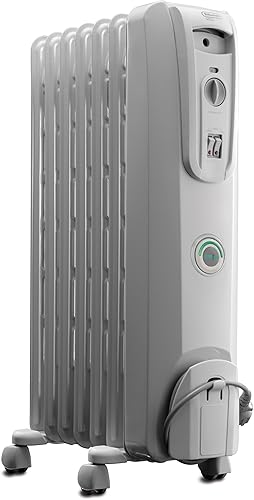
De'Longhi DeLonghi Dragon Digital Oil Filled Radiator
Oil-filled radiator vs electric heater: which warms you sooner?
Fan heaters usually feel warm sooner because they blow heated air toward you; oil-filled radiators take longer to heat up. That makes a fan model useful for a quick boost, while a radiator suits longer periods of steady room heating.
A radiator heats oil inside its sealed body, then transfers warmth to nearby surfaces and air. It can keep giving off heat for a while after its element cycles off, but that stored warmth doesn't appear immediately when you switch it on.
A fan heater moves air across a heating element and directs the warm airflow outward. You may notice that flow quickly if you sit nearby, though it can feel less useful across a larger room or around corners.
For a chilly room you use briefly, a fan heater can provide a quicker sense of warmth. If you spend hours in one room and prefer even, quiet heat, a radiator's slower response may be a fair trade.
What feels different during everyday use?
An oil-filled radiator gives quiet, gradual warmth; a fan heater gives moving air and more direct heat. Choose based on where you sit, how long you stay and whether airflow bothers you.
Many oil-filled radiators work without a fan, so they don't blow dust around the room. Their metal body can stay warm after the thermostat cycles off, so give the heater room and follow the manufacturer's safety directions.
A fan heater's airflow can feel helpful when aimed at your feet or desk. That same airflow may feel dry or distracting, and some models make noticeable noise while running.
If you want to compare a radiator directly with a fan model, see our guide to oil-filled radiator vs space heater. It focuses on that narrower choice.
Which heater suits a bedroom, office or living room?
A radiator suits long stretches in a room where quiet matters; a fan heater suits shorter, targeted heating. Match its stated coverage to the room, then account for drafts and insulation.
For a bedroom, consider whether you want heat to build gradually before bedtime or a quick warm-up while getting dressed. A timer can help set a schedule, but it doesn't replace safe placement or the instructions for overnight use.
In a home office, a fan heater can aim warmth toward your chair while the room is cool. A radiator may be more comfortable for long work sessions if you prefer still air and quieter operation.
A living room with several people may call for a heater that distributes warmth across the space. Compare oil-filled radiators for large rooms when choosing a model for that setting.
Don't assume a portable unit can heat an open-plan room just because its wattage sounds high; look at the model's coverage and your room layout.
If you need a small unit for a compact room, compare our best small oil-filled radiators. The smaller footprint can make placement easier, but it doesn't remove the need for clearance around the heater.
Do oil-filled radiators cost less to run?
The heater type alone doesn't determine your electricity use. Output, thermostat setting, room heat loss and run time all affect how much energy a portable heater uses.
A 1500-watt heater draws up to 1.5 kilowatt-hours for each hour its element runs at full power. Thermostat cycling and lower settings can reduce the time spent at full output, but actual use varies with the room and conditions.
A radiator's retained heat may help it continue warming a room after the element switches off. A fan heater's quick airflow may let you heat a person or small area without warming the entire room for as long.
Neither behavior guarantees a lower bill.
Use the heater in the room you occupy, close doors where practical and set the thermostat to a comfortable level. Check the appliance label and manual, and avoid powering a portable heater through an extension cord unless its instructions specifically allow it.
How do safety features differ?
Compare protections on the exact model and follow its manual, since safety features vary by heater. Keep any portable heater on a stable surface, away from curtains, bedding and furniture.
Look for features such as thermal cut-off, overheat protection, tip-over shutoff and a child lock. These protections can reduce particular risks, but they don't make a heater safe to cover, leave near fabric or place where it can be knocked over.
Oil-filled radiators have a warm surface that can remain hot after the unit switches off. Give it space to cool and keep children and pets from touching it.
Fan and ceramic heaters can have hot outlets or grilles. Keep objects out of the airflow path and avoid placing them where they can block an intake or tip into a walkway.
For broader guidance on run time and supervision, read can you leave an electric space heater on all day?. Follow the exact heater's instructions for unattended use.
Which oil-filled radiator features are useful?
Choose radiator controls that fit your routine, such as a timer for scheduled heat or multiple power modes for flexibility. A higher feature count matters less than controls you'll actually use.
The De'Longhi Dragon Digital model has a 24-hour timer, ECO Plus feature and child lock. Its fan-free design may suit a room where quiet operation matters.
The De'Longhi ComforTemp model has three heat settings and a ComfortTemp feature that adjusts temperature and power levels. It may suit you if you want simpler controls and quiet, fan-free warmth.
The DREO radiator has 600W, 900W and 1500W modes, eco mode, a remote and a 24-hour timer. Its controls offer more ways to adjust heat without getting up.
If you want a radiator with a timer and digital controls, compare the best oil-filled radiator heaters. For a greenhouse, check room conditions and intended use in our guide to best oil-filled radiator heaters for greenhouses.
Which heater should you choose for a garage?
Choose a heater rated for the garage's conditions and the space you need to warm. A portable indoor heater may not suit a cold, damp or dusty garage, so check its use instructions and placement needs.
Garage doors and gaps can let heat escape, which makes room size and insulation especially important. Consider whether you need to warm a workbench area or maintain comfort across the whole garage.
Our guide to the best heater for a garage explains what to check before choosing a model. Make sure the heater is intended for the environment where you plan to use it.
Oil-filled radiator vs electric heater: how do you decide?
Choose a fan heater for a quick, directed boost; choose an oil-filled radiator for quieter, gradual warmth during longer stays. Then check coverage, controls and safety features on the exact model.
If you value a faster warm-up near your chair, a fan heater is the simpler fit. If you prefer still air and can allow time for warmth to build, compare oil-filled radiator heaters by their controls and intended room size.
Sources
- U.S. Department of Energy: Electric Resistance Heating
- U.S. Consumer Product Safety Commission: Portable Heaters
Frequently asked questions
Does an oil-filled radiator heat a room faster than a fan heater?
A fan heater usually feels faster because it blows warm air toward you soon after startup. An oil-filled radiator takes longer to warm, then continues releasing heat after its element switches off.
Actual room warm-up depends on room size, insulation, outdoor temperature and heater output.
Are oil-filled radiators cheaper to run?
Neither design is automatically cheaper to run at the same power draw. A heater uses electricity while its element is on, so the room's heat loss, thermostat setting and run time matter.
Choose the right output for the room and heat only the space you use.
Are oil-filled radiators safer than other electric heaters?
Safety depends on the exact heater and how you use it. Look for protections such as overheat shutoff and tip-over protection where available, keep the heater away from fabrics, and follow its manual.
Plug portable heaters into a suitable wall outlet and don't leave one unattended.
Can an oil-filled radiator heat a large room?
Some can help heat a larger room, but check the model's stated coverage and output before choosing. Room insulation, ceiling height, drafts and outdoor temperature affect results.
A heater rated for a small or medium space may struggle if the room is open or poorly insulated.
Should I choose an oil-filled radiator or a fan space heater?
Choose an oil-filled radiator for quiet, steady warmth that continues after the element cycles off. Choose a fan space heater when you want warm air directed toward a person or spot soon after switching it on.
Compare controls and safety features for the exact models.