What Is the Best Way to Start a Fire without Lighter Fluid?
On this page (7 sections)
The best way to start a fire without lighter fluid is by using natural tinder and a reliable spark source. Think cotton balls soaked in petroleum jelly, dryer lint, or even birch bark. You’ll need something to ignite it, like a ferro rod or a magnifying glass on a sunny day.
For those times when you’re without traditional fire starters, knowing these methods can be a real lifesaver. Maybe you’re camping, perhaps your BBQ lighter ran out, or you just want to feel like a survival expert. Whatever the reason, mastering these techniques is a great skill to have in your back pocket.
- Use natural tinder like dryer lint or cotton balls.
- Find a spark source such as a ferro rod or a magnifying glass.
- Build a small teepee or log cabin structure for air flow.
- Ensure your tinder is completely dry.
- Patience and proper technique are key.
Ready to ditch the lighter fluid for good? We’ll guide you through several effective methods to get a fire going, even when you’re caught unprepared. Let’s get started!
Mastering Fire Starting Without Lighter Fluid
You’re looking to start a fire, but your trusty lighter fluid is nowhere to be found. No worries! We’ve researched and found that the best approach involves understanding a few fundamental principles: tinder, kindling, and fuel. Get these elements right, and you’ll have a roaring fire in no time, all without those volatile chemicals. It’s about working with nature, not against it.
The Fire Triangle: Fuel, Oxygen, Heat
Before we dive into specific methods, let’s briefly touch upon the fire triangle. You probably remember this from school, right? For any fire to ignite and sustain itself, you need three things: fuel to burn, oxygen to feed it, and heat to start the reaction. Our goal here is to create that initial heat and introduce it to proper fuel, ensuring there’s plenty of air circulating.
When you’re trying to start a fire without lighter fluid, you’re essentially focusing on generating that initial heat and making sure your fuel is ready to catch. It sounds simple, but it requires a bit of technique and practice. Don’t get discouraged if your first attempt doesn’t work – even fire experts have off days!
Preparing Your Fire-Starting Materials
This is where many people go wrong. You can have the best spark in the world, but if your materials aren’t ready, you’ll just end up frustrated. Think of it like cooking: you wouldn’t try to bake a cake without the right ingredients, would you? The same goes for fire.
Gathering and Preparing Tinder
Tinder is your fire’s starting point. It needs to be extremely fine and dry, something that will catch a spark or a tiny flame instantly. If it doesn’t light with one match, it’s not good tinder. We’ve found that having a good amount of this is absolutely critical. You always need more than you think.
Natural Tinder Options
- Dryer Lint: Keep a small bag of this in your emergency kit. It’s super fluffy and catches a spark like magic.
- Cotton Balls (especially petroleum jelly-soaked): These are fire-starting superstars. A cotton ball soaked in petroleum jelly will burn for several minutes, giving you ample time to get your kindling going (National Park Service).
- Birch Bark: The papery outer layer of birch trees is naturally oily and highly flammable, even when damp. Peel thin strips.
- Pine Needles & Small Wood Shavings: Look for very dry, dead pine needles. Shave thin curls from dry wood with a knife.
- Dead Grasses & Leaves: Make sure they are bone dry and crushed into a fluffy bundle.
Man-Made Tinder for Emergencies
Sometimes you might have a few everyday items that can act as excellent tinder in a pinch. Don’t underestimate these!
- Char Cloth: This is fabric (like cotton denim) that’s been partially burned in a low-oxygen environment. It catches a spark incredibly well and smolders, which you can then transfer to tinder.
- Tampons/Cotton Pads: Unroll or fluff them up. They are essentially compressed cotton.
- Steel Wool (fine grade) & 9V Battery: Touch the terminals of a 9V battery to fine steel wool, and it will instantly ignite. This is a quick and dirty method for emergencies.
Collecting Kindling and Fuel Wood
Once your tinder is ready, you need progressively larger pieces of wood. This is the bridge from your tiny flame to a sustained fire. Think of it as a ladder. Each rung needs to be reachable from the one below it.
- Kindling: These are twigs and sticks, about the size of a pencil to your thumb. They should be dry and easily snappable. They will catch fire from your tinder.
- Small Fuel Wood: Pieces about wrist-thick. These will catch from your kindling and start to build a good coal bed.
- Larger Fuel Wood: Anything bigger, up to the size you’ll burn in your fire pit or stove. This is for long-term heat.
Always ensure your wood is dry. If it bends instead of snapping, it’s likely too green or damp. Wet wood creates a lot of smoke and is hard to light. You want wood that’s been dead for a while and is off the ground.
Generating the Spark: Ignition Sources
With your materials prepped, it’s time to create that crucial spark or flame. Forget the lighter fluid – these methods are much more satisfying and often more reliable in varying conditions.
Ferro Rod and Striker
Many experts consider a ferro rod (ferrocerium rod) and striker to be one of the most reliable fire-starting tools. Why? Because it works even when wet, unlike matches or lighters. We found that this is a favorite among survivalists for good reason.
To use it, hold the rod steady against your tinder bundle. Use a sharp, firm scraping motion with the striker (or the back of your knife blade) down the length of the rod, directing the sparks into your tinder. It often takes a few tries, but once you get the technique, you’ll be showering your tinder with sparks.
Magnifying Glass (Solar Ignition)
This method feels like pure magic, doesn’t it? On a sunny day, a magnifying glass is an incredibly effective way to create fire. You’re harnessing the sun’s power directly.
Angle the magnifying glass to focus the sun’s rays into the smallest, brightest point possible onto your darkest tinder. Patience is key here. You’ll see a tiny wisp of smoke, then a glowing ember. Carefully blow on the ember to encourage a flame.
Friction Fire Methods (Bow Drill, Hand Drill)
These are the ancient ways, and they require a lot of practice, skill, and physical exertion. While incredibly rewarding, they aren’t the first choice for a casual campfire. Think of these as your ultimate backup, or a great skill to learn just for fun.
The basic idea is to create intense friction between two pieces of wood, generating enough heat to produce a coal. You then transfer this fragile coal to your tinder bundle. We’ve seen many people try this, and it takes a lot of perseverance!
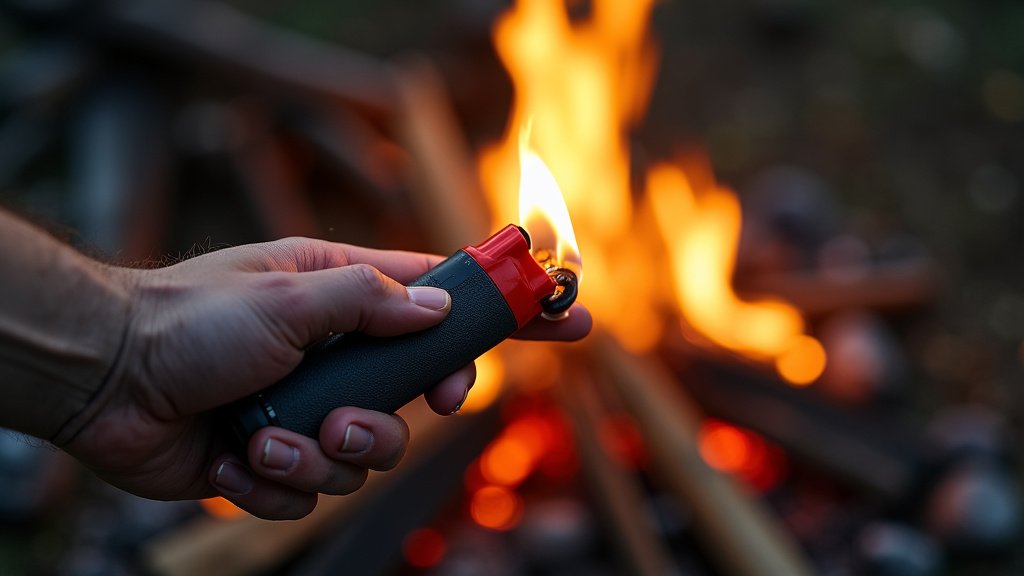
Matches and Lighters (When Not Using Fluid)
Of course, good old matches or a simple butane lighter are perfectly valid ways to start a fire without lighter fluid. The key is to use them properly with your prepped tinder and kindling. For another way to arrange fuel and kindling, see the top-down fire method. Don’t just hold a match to a big log; you’ll be there all day.
- Matches: Use waterproof matches if possible. Light, let the flame get strong, then gently apply to your tinder.
- Butane Lighter: Hold the flame steadily to your most flammable tinder. Don’t rush it.
The trick here is to let your tinder catch fire and burn vigorously before you introduce kindling. This provides a strong, consistent flame base.
Building Your Fire Structure
Once you have an ember or a small flame, you need to nurture it. For wood stove-specific steps, see our guide to starting a wood stove fire. This means building your fire in a way that allows proper airflow and gradually introduces larger pieces of fuel.
The Teepee Structure
This is one of the most common and effective fire-starting structures. It’s simple, allows great airflow, and directs the heat upwards.
- Place your lit tinder bundle in the center.
- Lean small pieces of kindling around the tinder, forming a cone or teepee shape. Leave gaps for air.
- As the kindling catches fire, gradually add slightly larger pieces of kindling, maintaining the teepee structure.
- Once you have a good flame, you can start adding small fuel wood, then eventually larger logs.
We’ve found that patience is your best friend during this phase. Don’t smother your baby flame with too much wood too quickly.
The Log Cabin Structure
This method builds a stable base that can support larger logs and create a good coal bed. It’s often used for longer-lasting fires.
- Place your lit tinder and a small amount of kindling in the center.
- Lay two small pieces of kindling parallel on either side of your tinder.
- Place two more pieces on top, perpendicular to the first two, creating a square.
- Continue adding layers, gradually increasing the size of the sticks, until you have a small “cabin” around your burning tinder.
This method works well once the fire is established, providing a strong frame for your fuel. It’s a bit more stable than a teepee once it gets going.
A Checklist for Fire Starting Success
Ready to try your hand at starting a fire without lighter fluid? Here’s a quick recap of what you’ll need to do:
- Choose a Safe Location: Clear away any flammable debris.
- Gather Plenty of Dry Tinder: More than you think you need!
- Collect Various Sizes of Dry Kindling and Fuel Wood: From pencil-thin to wrist-thick.
- Select Your Ignition Source: Ferro rod, magnifying glass, or matches.
- Build a Proper Structure: Teepee or log cabin are great starting points.
- Nurture the Flame: Start small, add fuel gradually, and ensure airflow.
Remember, practice makes perfect. The more you try these methods, the more comfortable and efficient you’ll become. You’ll soon be starting fires like a pro, completely free from lighter fluid!
Conclusion
You’ve seen that starting a fire without lighter fluid is not only possible but can also be incredibly rewarding. By understanding the fire triangle, carefully preparing your tinder and kindling, and choosing the right ignition source, you gain a truly valuable skill. This knowledge helps you be prepared for anything, whether you’re camping, in an emergency, or simply enjoying your backyard fire pit.
Now that you’re armed with these proven methods, it’s time to put them into practice. Gather your materials, find a safe spot, and start experimenting! The more you practice, the more confident and efficient you’ll become at building a thriving fire from scratch.
Frequently Asked Questions
Is it really safer to start a fire without lighter fluid?
Yes, we found that avoiding lighter fluid significantly reduces risks. Lighter fluids can cause flare-ups and burns, and they often contain volatile chemicals. Natural methods offer more control and a safer experience when building your fire.
What is the single best natural tinder to use?
Based on our research, petroleum jelly-soaked cotton balls are often considered the best. They catch a spark easily and burn for an impressively long time, giving you ample opportunity to get your kindling ignited.
Can I start a fire with just a magnifying glass on a cloudy day?
Unfortunately, no. A magnifying glass relies entirely on direct sunlight to concentrate heat onto your tinder. On a cloudy day, there won’t be enough focused energy to generate an ember.
How can I make sure my fire stays lit once it starts?
The key is to gradually add increasingly larger pieces of dry wood and ensure proper airflow. Don’t smother the small flame with big logs too soon. Nurture it with kindling first, and always allow oxygen to reach the flames. For optimal burning, consider what is the best wood for a wood stove to ensure a consistent and efficient flame.
What’s the hardest part about starting a fire without lighter fluid?
We’ve found that patience and proper preparation are often the biggest challenges. Rushing the process or using damp materials will almost always lead to frustration. Taking your time to gather excellent tinder and kindling makes all the difference.