How to Vent a Pellet Stove with a Top Exhaust
To vent a pellet stove with a top exhaust, connect the stove’s top outlet to an approved pellet vent system and route it outdoors using the vent size, clearances, supports, and termination rules in the stove manual and local code.
On this page (9 sections)
- What parts does a top-exhaust pellet stove vent need?
- How should you plan the vent route?
- What clearances and termination rules should you check?
- How do you connect the top outlet to the vent?
- When should you use a cleanout tee?
- What should you avoid when choosing a route?
- Are portable heaters a substitute for vent planning?
- What should you verify before using the stove?
- Which vent route should you choose for a top-exhaust pellet stove?
To vent a pellet stove with a top exhaust, connect its top outlet to an approved pellet vent system and route that system outdoors. The stove manual, vent manufacturer’s instructions, and local code determine the parts, clearances, supports, and termination location.
A top outlet can make a vertical route practical, but it doesn't make every pipe arrangement safe or compatible. Plan the full path before installing anything, including how the vent will pass through ceilings, walls, or a roof.
What parts does a top-exhaust pellet stove vent need?
A top-exhaust pellet stove needs compatible vent sections and fittings approved for that stove. Depending on the route, the system may also need an adapter, cleanout tee, support components, a wall or ceiling pass-through, flashing, and an outdoor termination.
Start with the stove manual. It identifies the exhaust outlet size and the vent system requirements; use the vent maker’s instructions to choose matching parts and assemble them in the required direction.
A common planning list includes:
- A stove adapter that matches the exhaust outlet and vent system
- Listed pellet vent sections in the required diameter
- A cleanout tee or other access point if the approved layout calls for one
- Supports and firestop or pass-through components specified for each building surface
- Roof flashing and a termination cap for a roof route, or a wall thimble and termination for an approved wall route
- Any required sealant, fasteners, or appliance-specific parts
Don't assume that parts from different vent brands join safely because their diameters look the same. Confirm that each component belongs to a compatible system and is allowed by the stove instructions.
A pellet stove vent is different from a standard wood-stove connector. If you're unsure how a chimney relates to a pellet appliance, see Do You Need a Chimney for a Pellet Stove?.
How should you plan the vent route?
Plan a short, direct route with as few turns as the manual allows. A straight rise through the roof may be possible with a top outlet, while a wall exit may need a different layout and additional vertical rise.
Sketch the stove location, outlet, vent centerline, nearby walls, ceiling, roof, and obstructions. Measure the proposed clearances and total route, then compare the plan with the appliance and vent instructions before purchasing components.
Does a pellet stove with a top exhaust need vertical venting?
A vertical route can be one option for a top-exhaust stove, but the required height and permitted layout vary by model. Follow the manual’s limits for vertical and horizontal runs, elbows, and overall vent length.
Don't treat “straight up” as a universal rule. A roof route still needs the right supports, firestops, flashing, and termination placement.
If the route includes an offset or crosses an occupied space, confirm that the configuration is allowed.
Can the vent exit through a wall?
A wall exit is possible on some installations, but only when the stove and vent instructions permit it. Wall routes need the correct penetration parts and must meet clearances from windows, doors, eaves, air intakes, walkways, and other features specified by the applicable instructions and code.
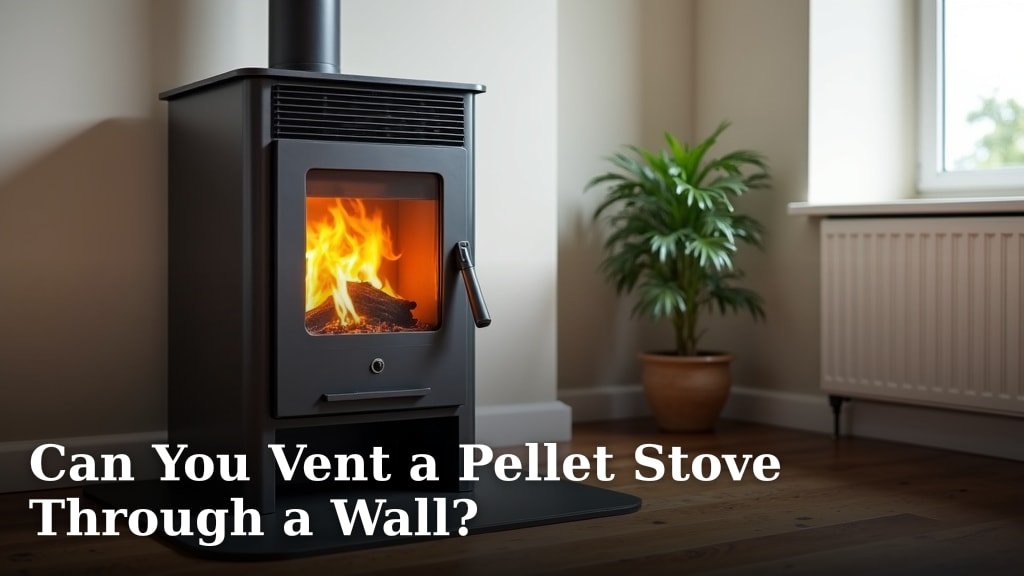
Our guides explain Can You Vent a Pellet Stove Through a Wall? and How to Vent a Pellet Stove Through a Wall Safely. Use them to compare route considerations, then check your own appliance requirements.
What clearances and termination rules should you check?
Check every required clearance to combustible materials along the route and around the outdoor termination. The exact distances depend on the vent system, stove, installation, and local rules.
Mark clearances on your route sketch before drilling or cutting. Include framing, cabinets, stored items, roof overhangs, nearby openings, and the space needed for service access.
The termination must be positioned according to the stove and vent instructions. Don't place it where exhaust can enter a window, door, or air intake, or where people could be exposed to discharge; confirm the required distances and height with the manuals and local authority.
Local building or mechanical rules may require permits or inspection. Ask the local authority having jurisdiction what applies before work starts, especially if the route passes through floors, ceilings, or a roof.
How do you connect the top outlet to the vent?
Connect the top outlet using the adapter and assembly method specified for the stove and vent system. Keep the first section aligned and supported so the stove collar doesn't carry the weight of unsupported pipe.
Before assembly, verify that the appliance is off and cool. Check that parts are undamaged and correctly oriented, then use only the fasteners or sealant called for by the instructions.
Avoid improvised reducers, unapproved elbows, and mixtures of vent brands. If a component doesn't fit the specified connection, stop and confirm compatibility instead of forcing it.
When should you use a cleanout tee?
A cleanout tee provides access for inspection and ash removal when it is part of the approved layout. Its location and cap arrangement should follow the vent manufacturer’s instructions.
Plan access before routing the pipe behind furniture or through a tight enclosure. A cleanout that can't be reached makes routine maintenance harder.
Pellet vent pipes need regular inspection and cleaning. Follow the stove’s schedule and see How to Clean Pellet Stove Vent Pipes (Safety Guide) for cleaning considerations.
What should you avoid when choosing a route?
Avoid unapproved materials, excessive bends, unsupported pipe, and blocked service access. Each can create a problem even if the finished vent looks tidy.
Don't vent into an attic, garage, crawlspace, or other indoor area. Don't cut framing or roof parts without checking structural requirements, and don't conceal vent sections unless the system instructions specifically allow it.
Avoid copying a neighbor’s layout or a photo online. Their stove model, vent system, building construction, and local code may differ from yours.
Are portable heaters a substitute for vent planning?
Portable heaters can provide heat in other settings, but they don't replace a pellet stove’s required vent system. Keep the stove’s exhaust route separate from any room-heating decision.
These heaters have different fuels and uses, so follow each unit’s own instructions and safety limits. Don't use an unvented heater to work around an incomplete pellet stove installation.
What should you verify before using the stove?
Before firing the stove, have the completed installation checked as required by the manual, local code, and permitting authority. Confirm that the vent is supported, joints are assembled as instructed, clearances are maintained, and the termination is unobstructed.
Check that the stove can be accessed for cleaning and service. Keep the manual and vent instructions available, and make sure household members know how to respond to a smoke or carbon monoxide alarm.
Use only the fuel and operating settings approved for the stove. Our guide to Best Wood Pellets For Pellet Stoves covers choosing pellets for the appliance.
Which vent route should you choose for a top-exhaust pellet stove?
Choose the route your stove manual and compatible vent system approve for your home. A vertical roof route may suit a top outlet when the clearances and termination work; a wall route is an option only when the appliance instructions allow it.
Before buying parts, confirm the outlet adapter, vent diameter, route limits, pass-through components, supports, clearances, and termination location. If any part of the route is uncertain, ask a qualified installer or local code official to review the plan.
For another appliance type, How to Vent a Gas Fireplace? explains why vent requirements depend on the specific unit. For a pellet stove, use its own manual as the final guide.
Frequently asked questions
Can a pellet stove vent straight up from the top?
Often, a top-exhaust pellet stove can connect to a vertical vent route, but the allowed layout depends on that stove’s manual and the vent maker’s instructions. Confirm the required vent type, diameter, height, supports, clearances, and termination location before buying parts or cutting an opening.
Does a pellet stove need a special chimney liner?
A pellet stove generally needs a listed vent system approved for that appliance, which may be a factory-built pellet vent rather than a masonry chimney liner. Check the stove manual and local code to see whether an existing chimney can be used and what liner or connection it requires.
Can I use regular single-wall stovepipe for a pellet stove?
Use only vent components approved for your pellet stove and installation. Ordinary stovepipe may not be rated or sealed for the appliance’s exhaust requirements, so don't substitute it based on appearance or a matching diameter.
Confirm component compatibility with the stove and vent manufacturers.
Should a pellet stove vent rise before it exits a wall?
Some manuals allow a short horizontal exit, while others require or recommend a vertical rise before the wall penetration. The right route depends on the appliance, vent system, and local rules.
Follow the exact approved layout and clearances rather than copying another installation.