Can You Use a Fire Pit on a Wood Deck?
On this page (4 sections)
No, you generally should not use a fire pit directly on a wood deck without significant precautions. We found that the intense heat from a fire pit can easily damage or even ignite the wood, creating a serious fire hazard. Safety is your top priority when enjoying outdoor fires. To compare suitable options, see fire pits for decks.
You might be wondering about those shiny new fire pits for wooden decks. Even with a heat shield, radiated heat and stray embers pose risks to combustible surfaces like wood. It’s not just about direct flames; even a small spark can ruin your evening and your deck.
TL;DR:
- Direct fire pit use on wood decks is unsafe.
- Heat and embers can cause serious damage or fires.
- Specialized heat barriers are often not enough.
- Consider alternative, non-combustible surfaces for fire pits.
- Always prioritize safety over convenience.
Let’s walk through exactly why this is such a concern and what you can do to enjoy your fire pit safely without risking your home or family.
The Risks of Placing a Fire Pit on Your Wooden Deck
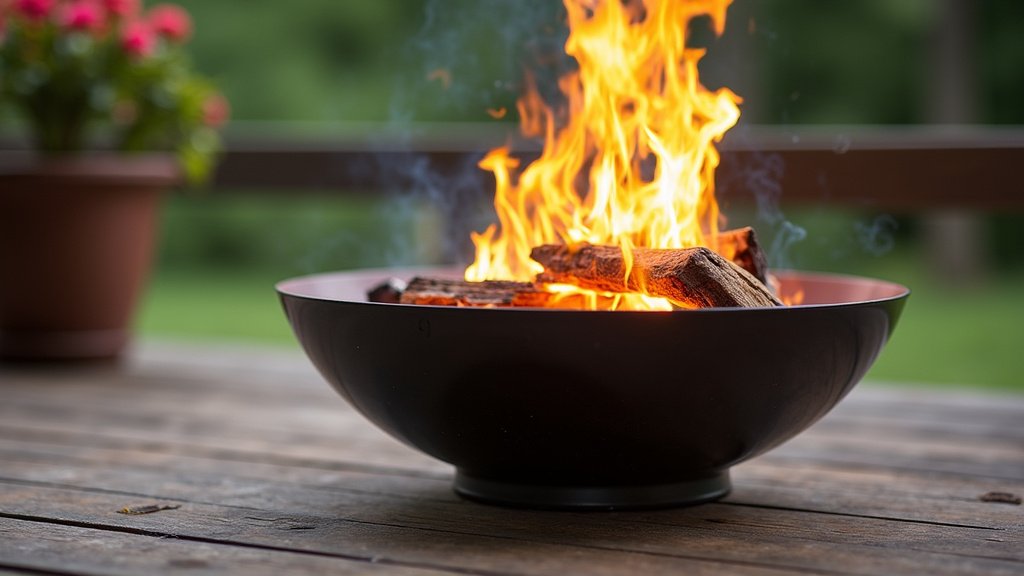
You’ve got that beautiful wooden deck, perfect for entertaining. And a fire pit seems like the ideal addition for those cool evenings. But mixing fire and wood can quickly turn a cozy gathering into a dangerous situation. We found that fire pits generate significant heat, not just from the flames themselves, but also radiating downwards and outwards.
This radiant heat can cause wood to dry out, char, or even catch fire. It’s a bit like cooking; even if the flame doesn’t touch the pan, the heat transfers through. For your wooden deck, this heat can severely compromise its structural integrity over time. Think of it as a hidden danger, slowly weakening your deck boards.
Heat Transfer: More Than Just Flames
Many people only worry about direct flames touching their deck. However, heat transfer works in several ways. There’s convection, where hot air rises, and conduction, where heat travels through direct contact. But the biggest culprit for decks is radiant heat.
Radiant heat travels as infrared waves, much like the sun warms your skin. This heat can penetrate wood, raising its temperature to dangerous levels. We found that even fire pits with seemingly good bases can allow enough radiant heat to pass through and affect the surface below. Your deck might feel cool to the touch, but the wood fibers underneath could be heating up. It’s a silent threat that many overlook.
The Science of Combustion
Wood, like any organic material, has an ignition temperature. This is the point at which it will spontaneously combust, or catch fire, even without a direct flame. We found that the ignition temperature for common decking woods can range from 350°F to 550°F. A fire pit, even a small one, can easily reach temperatures far exceeding this.
It’s not an instant explosion; rather, the wood slowly heats up. It dries out, then chars, and eventually, if the heat is sustained, it will ignite. This process can be subtle and go unnoticed until it’s too late. It’s important to remember that prolonged exposure to high heat drastically lowers the ignition point of wood, making it even more susceptible to fire.
Ember Escapes and Spark Hazards
Even if you’re super careful with direct heat, fire pits are notorious for sending out stray embers and sparks. Have you ever watched a log crackle and pop, sending tiny fiery bits into the air? Those little sparks are a big problem for a wooden deck.
Embers, especially from wood-burning fire pits, can travel surprising distances. If one lands on a dry crack in your deck board, or catches a piece of stray leaves, it can quickly flare up. Many fire pits come with spark screens, but these screens are not foolproof. They reduce the risk, but they don’t eliminate it entirely. We found that even a small, smoldering ember can cause significant damage to your deck or, worse, start a larger fire.
Damage Beyond Fire: Aesthetic and Structural Concerns
Let’s say you’re lucky and no fire starts. Using a fire pit directly on a wood deck can still cause significant damage over time. The intense heat can discolor the wood, leaving permanent burn marks or an unsightly dark stain. This isn’t just a surface issue; it often penetrates the wood grain, making it difficult or impossible to sand out.
Beyond aesthetics, repeated heat exposure can also lead to structural weakening. Wood can dry out, crack, warp, and become brittle. This compromises the integrity of your deck, making it less safe to walk on. We found that deck repairs due to heat damage can be extensive and costly, sometimes requiring entire sections to be replaced. It’s an expense and a headache you certainly want to avoid.
Safe Alternatives and Best Practices for Fire Pit Enjoyment
So, what’s a fire-loving person to do? Don’t despair! You can absolutely enjoy your fire pit safely; it just requires a bit of planning and understanding. The key is to separate your fire pit from your combustible deck surface. It’s all about creating a non-combustible zone.
Think of it like cooking on a stovetop. You don’t put the pan directly on your kitchen counter, right? You use the burner. A fire pit needs its own “burner” area, a safe space where heat and sparks won’t cause trouble. There are several excellent options available that allow you to savor the ambiance of a fire without risking your home.
Designated Non-Combustible Surfaces
The safest place for a fire pit is on a surface that won’t catch fire. This includes materials like concrete, stone pavers, brick, or gravel. Many homes have a patio or a dedicated backyard area made from these materials. This is your ideal location for any fire pit.
If you don’t have one, consider creating a small, dedicated fire pit area in your yard. A simple pad of concrete pavers or a gravel bed can be an easy weekend project. This provides a clear, safe zone for your fire pit, giving you peace of mind.
Portable Fire Pit Options
- Concrete or Paver Patio: This is the gold standard. A dedicated patio section ensures maximum safety and durability.
- Gravel Pit: A simple, inexpensive option. Dig a shallow pit and fill it with non-flammable gravel.
- Fire-Resistant Mats (with caveats): While some mats claim to be “fire-resistant,” we found they often protect from embers but might not fully protect against sustained radiant heat. Always read the product specifications carefully and combine them with other safety measures.
- Metal Fire Pit Pads: These can offer a good barrier against direct heat conduction, but radiant heat and embers are still concerns. They are best used in conjunction with other precautions, not as a standalone solution on a wood deck.
What About Fire Pit Mats and Heat Shields?
You’ve probably seen ads for fire pit mats or heat shields designed to protect surfaces. Are they enough for a wood deck? We found that while these products can offer some level of protection, they often aren’t a complete solution for wooden decks.
Many mats are excellent at catching stray embers or preventing ash from dirtying your surface. However, their ability to block the intense, sustained radiant heat that penetrates wood is often limited. It’s like putting on a thin oven mitt; it helps, but you wouldn’t hold a hot pan for an extended period with just that.
| Protection Type | Primary Benefit | Limitations on Wood Decks |
|---|---|---|
| Fire Pit Mats | Catches embers, ash, and minor spills. | Limited protection against sustained radiant heat transfer to wood. |
| Heat Shields/Stands | Elevates fire pit, creating an air gap for heat dissipation. | May not fully block downward radiant heat; embers still a risk. |
| Fire-Resistant Decking (Composite) | Designed to resist ignition and spread of flame. | Still susceptible to damage (melting, charring) from direct, intense heat. |
| Concrete/Paver Pad | Non-combustible, full heat and ember protection. | Requires dedicated space, not always portable. |
If you must use a fire pit near a wooden deck, a mat or shield should be considered a secondary safety measure, not your primary line of defense. Always pair it with other precautions, like a significant air gap, a bucket of water nearby, and constant supervision. Remember, your goal is to eliminate risk, not just reduce it.
Essential Fire Pit Safety Checklist
No matter where you place your fire pit, safety should always be your number one concern. These simple steps can help ensure your fire pit experience is enjoyable and safe for everyone:
- Choose a Safe Location: Place your fire pit at least 10 feet away from any structures (house, garage, deck railings), trees, or overhead combustibles. (National Fire Protection Association guidelines).
- Use a Non-Combustible Base: Always set your fire pit on concrete, stone, brick, or gravel.
- Monitor Wind Conditions: Avoid using your fire pit on windy days. Embers can easily travel and ignite dry vegetation.
- Keep a Fire Extinguisher/Water Nearby: Have a bucket of water, a garden hose, or a fire extinguisher ready to douse stray embers or put out the fire quickly.
- Never Leave Unattended: A burning fire pit should always have an adult supervising it. Fires can spread rapidly.
- Completely Extinguish: Ensure the fire is completely out and cold to the touch before leaving the area or going inside. Stir the ashes and douse them with water until there are no hot spots.
Following these guidelines helps protect your home, your family, and your peace of mind. A little bit of caution goes a long way when you’re dealing with open flames.
Conclusion
You’ve seen why using a fire pit directly on a wood deck poses serious risks, from radiant heat damage to potential fires from stray embers. Your safety and the longevity of your deck are too important to compromise. We found that while tempting, the convenience isn’t worth the danger or the costly repairs.
Instead, embrace the many safe options available. Choose a non-combustible surface like a patio or gravel pad for your fire pit. By taking these simple precautions, you can enjoy countless cozy evenings by the fire, knowing you’ve protected your home and loved ones. Make the smart, safe choice for your outdoor enjoyment.
Frequently Asked Questions
Can a fire pit mat completely protect my wood deck?
No, a fire pit mat alone is usually not enough for complete protection on a wood deck. While they can catch embers and ash, many mats don’t fully block the intense radiant heat that can penetrate and damage wood over time. They are best used as a secondary safety measure, not a standalone solution.
How far should a fire pit be from a wooden deck?
For optimal safety, you should place your fire pit at least 10 feet away from any combustible structures, including a wooden deck. This distance helps prevent embers from reaching the deck and reduces the impact of radiant heat on the wood.
Will composite decking be safe for a fire pit?
Even fire-resistant composite decking is generally not safe for direct fire pit placement. While it resists ignition better than wood, intense heat can still melt, char, or deform composite materials, leading to irreversible damage and potential safety hazards.
What if my wood deck is covered with concrete pavers?
If your wood deck is structurally sound and completely covered with a layer of concrete pavers, you can likely use a fire pit on top of the pavers. The pavers create a non-combustible barrier against heat and embers, but ensure the pavers are stable and fully supported.
What is the biggest risk of using a fire pit on a wood deck?
The biggest risk is fire. Both radiant heat, which can cause the wood to reach its ignition temperature, and stray embers that can land on dry deck boards, are serious fire hazards. Damage to the deck’s aesthetics and structural integrity is also a significant concern.