How to Split Firewood by Hand?
On this page (9 sections)
- Your Guide to Splitting Firewood by Hand
- Choosing the Right Tools for the Job
- Setting Up Your Splitting Area for Success
- Mastering the Splitting Technique
- Safety First: Protecting Yourself While You Work
- Troubleshooting Common Splitting Problems
- Your Firewood Splitting Checklist
- Conclusion
- Frequently Asked Questions
Splitting firewood by hand is totally doable with the right technique and tools. You’ll need a sturdy axe or maul and a sharp edge to get started. It takes some effort, but it’s a rewarding way to prepare your wood for burning.
Many people wonder if splitting wood by hand is still practical today. We found that it’s not just practical; it’s also a great way to get some exercise and connect with a traditional skill. Learning how to split wood efficiently can save you money and provide a fantastic supply of seasoned firewood for your home.
- Use a sharp axe or maul.
- Find a stable chopping block.
- Aim for knots and cracks in the wood.
- Swing with your whole body for power.
- Always prioritize safety.
Ready to get your hands dirty? Below, we’ll walk you through the simple steps to safely and effectively split your own firewood by hand.
Your Guide to Splitting Firewood by Hand
Splitting firewood by hand is a skill that connects you to older traditions. It’s also a fantastic way to prepare logs for your fireplace or wood stove. You’ll need a bit of know-how and the right tools to do it safely and efficiently. We’ve found that with practice, you can master this rewarding task.
Choosing the Right Tools for the Job
The tools you use make a big difference in how easy and effective your firewood splitting will be. Think of them as your partners in this manual labor.
Axes vs. Mauls: What’s the Difference?
When you’re starting out, you might wonder which tool is best. Both axes and mauls are designed for splitting wood, but they have distinct features.
- Axe: Axes typically have a thinner, sharper blade. They are excellent for splitting smaller logs or pieces of wood that are already somewhat cracked. Think of an axe as a precision tool for wood.
- Maul: A maul is heavier and has a wedge-shaped head. Its weight helps drive through tougher, denser wood. Mauls are designed for brute force and are often preferred for larger, unseasoned logs. Many people find a maul makes the job quicker for larger amounts of wood.
The Importance of Sharpness and Weight
A sharp tool is a safe tool. A dull blade won’t cut cleanly, requiring more force and increasing the risk of the tool glancing off the wood. We found that regular sharpening is key.
The weight of your tool matters too. A heavier maul provides more momentum, helping it sink deeper into the wood. However, you need to be strong enough to swing it safely. Research suggests that finding a tool with a comfortable weight for your strength is essential for preventing injury (CDC).
Consider the length of the handle. A longer handle can provide more leverage and power, but it also requires more space to swing safely. Many experts recommend a handle length that allows you to swing comfortably without overextending.
Setting Up Your Splitting Area for Success
Your environment plays a huge role in safe and efficient wood splitting. You want to set yourself up for a smooth process, not a dangerous one.
The Chopping Block: Your Stable Foundation
You absolutely need a stable chopping block. This is the base where you’ll place your logs to split them. A good chopping block should be:
- Sturdy: It shouldn’t wobble or shift when you strike it.
- The Right Height: The top of the block should be around your hip or thigh. This height allows you to use your body weight effectively without bending too much.
- Durable: Hardwood blocks last longer.
We found that a large, solid stump or a thick-cut log end works best. Avoid using unsteady surfaces like loose rocks or uneven ground. A wobbly block is an invitation for accidents.
Clearing Your Workspace
Before you start swinging, take a moment to assess your surroundings. Clear away anything that could get in your way or cause you to trip. This includes stray branches, tools, rocks, or even curious pets and children. Safety experts at the National Institutes of Health (NIH) stress the importance of a clear zone around your work area.
You’ll need plenty of room to swing your axe or maul. Ensure there are no overhead obstructions like low branches or wires. Imagine a circle around you where the tool can swing freely. This circle should be clear.
Mastering the Splitting Technique
Now for the main event! Splitting wood effectively involves technique, not just brute strength. It’s about working smarter, not harder.
Positioning the Log
Place the log firmly on your chopping block. You want it to sit securely. If it feels unstable, adjust it or even prop it up with a smaller piece of wood. A log that rolls is a recipe for trouble.
Look for natural weaknesses in the wood. Does the log have any existing cracks or splits? These are your entry points. Many experts recommend aiming for these spots first.
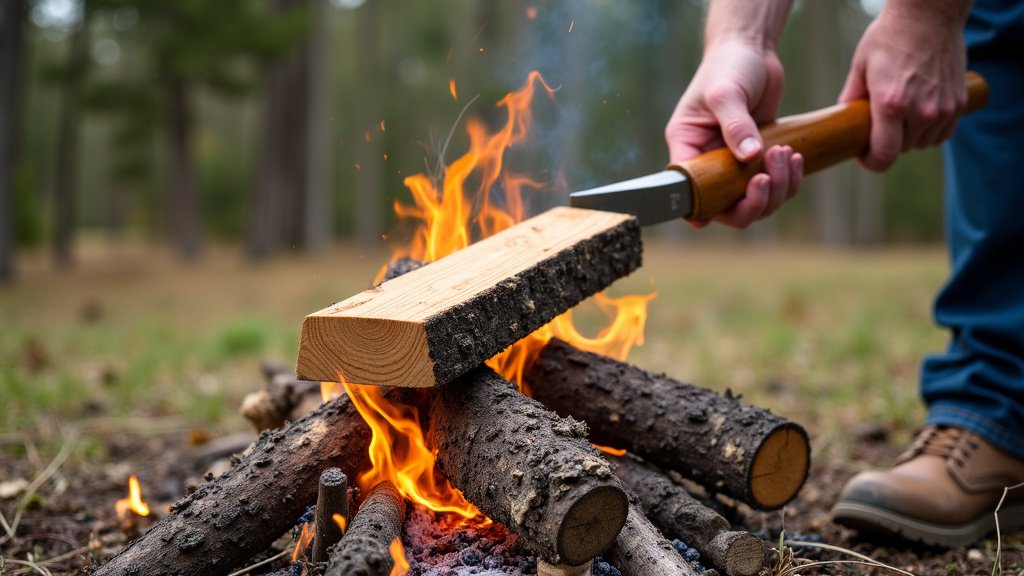
Pay attention to knots. Knots are dense, hard parts of the wood. Hitting a knot directly can be tough and might cause your tool to bounce off. Try to split around knots if possible.
The Swing: Power and Precision
This is where technique truly shines. Don’t just swing with your arms. You want to engage your entire body.
Start by standing with your feet shoulder-width apart, facing the log. Grip the axe or maul firmly. Lift the tool up and back, letting your body’s momentum help. As you bring the tool down, twist your hips and torso. This generates power.
Aim for the crack or weak spot you identified. Let the weight of the maul or axe do most of the work. If the wood doesn’t split on the first try, don’t force it. Reposition and try again. Sometimes, a second or third strike is all it takes.
We found that controlling your swing is more important than trying to hit the wood as hard as possible. A controlled, powerful swing is safer and more effective. It’s like a controlled chop, not a wild hack.
Splitting Different Types of Wood
Not all wood is created equal. Some types split much easier than others. This is a good thing to know when you’re preparing your woodpile.
Hardwoods like oak, maple, and hickory are dense and tough. They often require more effort and a heavier maul. You might find yourself aiming for existing cracks more often with these woods.
Softwoods like pine, fir, and cedar are much easier to split. Their fibers are less tightly packed. You can often split these with a well-aimed swing from an axe or maul.
Green Wood vs. Seasoned Wood: We found that splitting green wood (freshly cut) can be easier than splitting wood that has dried and hardened significantly. However, green wood needs time to season before it burns well.
Safety First: Protecting Yourself While You Work
This cannot be stressed enough: safety is paramount when splitting firewood. A moment’s inattention can lead to serious injury. Remember, you’re wielding a heavy, sharp tool.
Essential Safety Gear
Always wear protective gear. It’s non-negotiable. Based on recommendations from safety organizations like the American Red Cross, you should always use:
- Safety Glasses: To protect your eyes from flying chips of wood.
- Gloves: Thick work gloves protect your hands from splinters and blisters.
- Sturdy Boots: Steel-toed boots offer the best protection against dropped logs or tools.
- Long Pants: Protect your legs from flying debris.
Safe Swinging Practices
Never swing your axe or maul when anyone is standing too close. Maintain a safe distance between yourself and others. The Cleveland Clinic recommends a minimum of a 10-foot radius around the splitting area.
Be aware of where your tool is at all times. Make sure your grip is firm and your footing is stable before each swing. Avoid swinging if you are tired. Fatigue leads to mistakes.
If your tool gets stuck in a log, don’t try to force it out with your foot or hand. Carefully try to wiggle it free or use another piece of wood to leverage it out. Never stand directly over a stuck tool.
Troubleshooting Common Splitting Problems
Even with the best intentions, you might run into a few snags. Here’s how to tackle them.
When Wood Won’t Split
Sometimes, a log just seems determined to stay in one piece. This often happens with knots or very dense wood.
- Try a Different Angle: You might need to hit the log from a slightly different spot.
- Use the Maul’s Wedge: If you’re using a maul, the wedge shape is designed to split. Ensure you’re hitting with the blunt side facing the wood to drive the wedge in.
- Drill and Wedge: For extremely stubborn logs, some people drill a hole partway into the crack and then insert a metal splitting wedge. You then strike the metal wedge with your maul.
Dealing with Round Logs
Perfectly round logs can be trickier than those with flat sides. They tend to roll.
The best approach is to make a few initial splits to create flatter surfaces. Once you have a few flat sides, the log will be much more stable on your chopping block. It’s like giving it a stable base.
Your Firewood Splitting Checklist
Ready to get started? Keep this quick checklist handy:
- Gather your tools (axe or maul, sharpening stone).
- Select and prepare your stable chopping block.
- Clear your entire workspace of debris.
- Put on all your safety gear (glasses, gloves, boots).
- Inspect the log for cracks and knots.
- Swing with your body, not just your arms.
- Prioritize safety above all else.
Conclusion
You’ve learned the essentials of splitting firewood by hand! From choosing the right axe or maul to setting up a safe workspace and mastering your swing, you’re ready to tackle those logs. Remember, consistency and safety are your best tools. You’ll find that with each log you split, you’ll become more efficient and confident. So grab your gear, head out to your chopping block, and enjoy the rewarding process of preparing your own firewood. Your cozy fireplace awaits!
Frequently Asked Questions
How often should I sharpen my axe or maul?
We found that sharpening your tool regularly is key for safety and efficiency. Aim to sharpen it before each splitting session or whenever you notice it’s not cutting cleanly. A dull blade requires more force and can glance off the wood, increasing risk.
What’s the best way to handle a log that keeps rolling?
If your log is rolling, first try to create a flatter surface by making a couple of initial splits. This gives the log a more stable base on your chopping block. You can also try wedging it against your chopping block with a smaller piece of wood.
Is it harder to split seasoned wood or green wood?
Generally, green wood (freshly cut) can be easier to split than seasoned wood that has dried and hardened over time. However, green wood needs to dry out properly before it will burn efficiently. You might need more force for seasoned logs.
Can I split firewood with just an axe, or do I really need a maul?
You can often split smaller logs or those already showing cracks with a sharp axe. For larger, denser logs, a maul’s heavier, wedge-shaped head is more effective. Many people find a maul makes the job quicker for larger amounts of wood.
How much space do I really need around my splitting area?
You need ample room to swing your tool freely and safely. Experts recommend a clear radius of at least 10 feet around your splitting area. Ensure there are no overhead obstructions like branches or wires within this zone.