How Much Does an Electric Fireplace Add to Your Electric Bill?
On this page (9 sections)
- Understanding Your Electric Fireplace’s Impact on Your Energy Bill
- Key Factors Influencing Your Electric Fireplace’s Cost
- Electric Fireplace vs. Other Heating Methods
- Tips for Managing Electric Fireplace Energy Costs
- Modern Electric Fireplaces: Energy Efficiency Improvements
- How Often Will You Actually Use It?
- Final Thoughts on Electric Fireplace Energy Consumption
- Conclusion
- Frequently Asked Questions
An electric fireplace can add a noticeable amount to your electric bill, but the exact cost depends on several factors. Typically, you can expect to spend between $0.10 and $0.60 per hour of use, depending on your local electricity rates and the fireplace’s wattage. It’s more affordable than many people think, especially for supplemental heat, but it’s not completely free to run. Understanding these costs helps you budget effectively for cozy evenings. We found that newer models are often more energy-efficient.
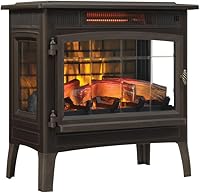
Think of an electric fireplace as a specialized appliance. Its heating element uses electricity to warm a room, similar to a space heater. The visual flame effect also consumes some power, though usually less than the heater. Running it for short periods or using just the flame effect will keep costs low. However, using it as a primary heat source for long hours will definitely increase your monthly expenses. We found that consistent use can add up quickly over time.
- Electric fireplaces add to your electric bill.
- Costs range from $0.10 to $0.60 per hour.
- Factors include wattage and electricity rates.
- Use as supplemental heat is more cost-effective.
- Just the flame effect uses minimal electricity.
Let’s break down precisely how much an electric fireplace might impact your electricity bill and what you can do to manage those costs.
Understanding Your Electric Fireplace’s Impact on Your Energy Bill
So, you’re curious about how much that cozy electric fireplace will add to your electricity bill. It’s a fair question! Many homeowners wonder if running one will send their monthly costs soaring. We’ve looked into it, and the good news is that for supplemental heat, it’s often quite manageable. But, like anything powered by electricity, there’s a cost involved.
The core of an electric fireplace’s operation comes down to its heating element and the flame effect. The heating element is the main power consumer when you’re looking for warmth. The flame effect, while adding to the ambiance, uses considerably less energy. Think of it as a bright LED light show; it uses a fraction of the power needed to heat your room.
Key Factors Influencing Your Electric Fireplace’s Cost
Several elements combine to determine the final price tag on your electricity bill. Understanding these can help you make informed decisions about how and when you use your electric fireplace.
Wattage: The Horsepower of Your Heater
The wattage of your electric fireplace is perhaps the most critical factor. Wattage tells you how much power the appliance uses at any given moment. Most electric fireplaces offer different heat settings, often ranging from a low setting (around 750 watts) to a high setting (typically 1500 watts).
A higher wattage means more electricity is being drawn. For example, a 1500-watt heater uses twice the power of a 750-watt heater. We found that most standard electric fireplaces operate at or around 1500 watts on their highest setting, which is a common benchmark for many household heaters.
Calculating Hourly Cost Based on Wattage
To get a rough idea of the cost, you can do a simple calculation. First, find out your local electricity rate. This is usually measured in cents per kilowatt-hour (kWh). You can typically find this on your monthly utility bill.
Let’s say your electricity costs $0.15 per kWh. If your fireplace is set to its high setting of 1500 watts, it will consume 1.5 kilowatts (1500 watts / 1000). To find the hourly cost, multiply the kilowatts by your rate: 1.5 kW * $0.15/kWh = $0.225 per hour. So, running it on high for an hour would cost about 23 cents.
Comparing Heat Settings
If you’re using the lower heat setting, say 750 watts, the calculation changes. That’s 0.75 kW. Using the same electricity rate of $0.15 per kWh: 0.75 kW * $0.15/kWh = $0.1125 per hour. Running it on low costs about 11 cents per hour. This shows how much you can save by opting for a lower heat setting when possible.
Your Local Electricity Rates: The Price of Power
The cost per kilowatt-hour (kWh) varies significantly from state to state and even by utility provider within a state. Some areas have much cheaper electricity than others. This is a huge factor in your overall cost.
For instance, if your electricity rate is $0.10 per kWh, running a 1500-watt fireplace costs $0.15 per hour (1.5 kW * $0.10/kWh). If your rate is $0.30 per kWh, that same 1500-watt fireplace would cost $0.45 per hour (1.5 kW * $0.30/kWh). As you can see, your local pricing has a major impact.
We found that average electricity rates can range from under $0.10 per kWh in some regions to over $0.25 per kWh in others. This wide range is why you’ll see varying estimates for electric fireplace running costs.
Usage Time: How Long Are You Cozy?
Naturally, the longer you run your electric fireplace, the more electricity it will consume, and the higher your bill will be. Using it for a quick 30-minute burst to take the chill off is very different from running it continuously for several hours each evening.
If you’re only using it for supplemental heat for an hour or two a day, the increase on your bill will likely be minimal. However, if you’re trying to heat an entire room or house with it for 8-10 hours a day, the costs will accumulate much faster. It’s best to think of it as a comfort enhancer rather than a primary heating solution for extended periods.
Flame Effect Only: Ambiance Without the Heat
Many electric fireplaces allow you to use just the visual flame effect without turning on the heater. This is a fantastic feature for creating a cozy atmosphere without using much electricity.
The LED lights used for the flame effect typically consume very little power, often around 10-20 watts. At 10 watts (0.01 kW) and a rate of $0.15 per kWh, running the flame effect for an entire hour would only cost about $0.0015, or less than half a cent! So, if you love the look but don’t need the heat, you can enjoy it without a noticeable impact on your bill.
Electric Fireplace vs. Other Heating Methods
It’s helpful to compare the cost of running an electric fireplace to other common heating methods to get a better perspective. While electric fireplaces are generally more efficient than older electric baseboard heaters, they are often more expensive to run than natural gas furnaces.
Comparison Table: Estimated Hourly Costs
This table provides a rough estimate. Your actual costs will vary based on the specific appliance, your electricity rates, and the efficiency of your home’s insulation.
| Heating Method | Estimated Wattage/BTU | Estimated Cost Per Hour (Using $0.15/kWh & typical rates) |
|---|---|---|
| Electric Fireplace (1500W Heater) | 1500 Watts | ~$0.23 |
| Electric Fireplace (750W Heater) | 750 Watts | ~$0.11 |
| Electric Fireplace (Flame Effect Only) | 20 Watts | < $0.01 |
| Central Electric Furnace (using more power) | ~10,000 – 20,000 Watts | ~$1.50 – $3.00+ |
| Natural Gas Furnace (example rate) | ~100,000 BTU/hr (uses ~1 Therm) | ~$0.70 – $1.20 (varies greatly by gas price) |
As you can see, when used as a supplemental heat source, electric fireplaces are quite competitive, especially compared to running a whole-house electric furnace for the same area. Natural gas can often be cheaper per BTU, but requires a gas line and is a different type of investment.
Tips for Managing Electric Fireplace Energy Costs
Want to enjoy your electric fireplace without worrying too much about your bill? Here are some practical tips we’ve found helpful.
- Use it as Supplemental Heat: The most cost-effective way to use an electric fireplace is to supplement your primary heating system. It’s perfect for warming a specific zone or making a slightly cooler room more comfortable.
- Zone Heating is Key: Instead of heating your whole house, use the fireplace to heat the room you’re currently in. This avoids wasting energy on unoccupied spaces.
- Set a Timer: Many electric fireplaces come with built-in timers. Use this feature to automatically turn off the heater after a set period, preventing it from running longer than necessary.
- Utilize Lower Heat Settings: If the room isn’t too cold, try the lower wattage setting. It provides just enough warmth for comfort and uses less energy.
- Proper Insulation: Ensure the room is well-insulated. A well-sealed room will retain heat better, meaning your fireplace won’t have to work as hard. Check for drafts around windows and doors.
- Combine with Other Ambiance: If you love the look, run the flame effect only when you don’t need heat. It creates a wonderful atmosphere for very little cost.
Modern Electric Fireplaces: Energy Efficiency Improvements
Technology is always improving, and electric fireplaces are no exception. Newer models often incorporate more energy-efficient components and features.
We found that many modern electric fireplaces use LED lighting for their flame effects, which is significantly more energy-efficient than older incandescent bulbs. Some also feature improved heating elements and more sophisticated thermostat controls. These advancements mean you can often get the same cozy ambiance and warmth with a lower power draw.
When purchasing a new electric fireplace, look for features like energy-saving modes or higher Energy Star ratings if available, though specific ratings for fireplaces are less common than for other appliances. Reading reviews and looking at the manufacturer’s specifications for wattage and estimated heating coverage can also give you clues about its efficiency.
How Often Will You Actually Use It?
Consider your personal habits. Will you use it daily during the colder months, or just for occasional special occasions? Are you the type who likes to have a fire going all evening, or do you just need a quick boost of heat in the morning?
Your answer to these questions will directly influence how much an electric fireplace adds to your bill. If it’s going to be a daily companion, understanding the hourly cost is essential. If it’s a weekend-only luxury, the impact will be much smaller. We found that understanding your own usage patterns is half the battle in managing any appliance’s cost.
Final Thoughts on Electric Fireplace Energy Consumption
In summary, an electric fireplace is a versatile appliance that can add warmth and ambiance without breaking the bank, provided you use it wisely. By understanding the wattage, your local electricity rates, and how long you run it, you can accurately estimate its impact on your bill. Remember, using it for supplemental heat and enjoying the flame effect are the most cost-effective approaches.
For supplemental heating, costs can range from about $0.10 to $0.60 per hour. Running the flame effect alone costs mere pennies per hour. Newer models are often more efficient, and smart usage habits can further reduce consumption. So, go ahead and get cozy, just be mindful of the power it uses!
Conclusion
You’ve learned that an electric fireplace can add warmth without a huge energy hit. We found that costs typically range from $0.10 to $0.60 per hour, depending on wattage and your local electricity rates. Using it for supplemental heat or just the flame effect keeps expenses low. Think of it as a fantastic way to boost comfort in a specific area.
To manage costs effectively, remember to use lower heat settings when possible and consider timers. Now you can enjoy that cozy ambiance with confidence, knowing you can control the impact on your electric bill. Go ahead and get that fireplace lit!
Frequently Asked Questions
Will running an electric fireplace make my heating bill skyrocket?
Not usually, if you use it as supplemental heat. We found that using it for a few hours a day to warm a single room is generally quite affordable. It’s much less expensive than heating your entire home with electricity.
Is running just the flame effect on an electric fireplace expensive?
No, not at all. The flame effect uses very little electricity, typically around 10-20 watts. This means it will cost mere pennies per hour to run, adding almost nothing noticeable to your electric bill.
How much does a 1500-watt electric fireplace cost per hour to run?
This depends on your electricity rate, but we calculated it can range from about $0.15 to $0.45 per hour. If your electricity is $0.10/kWh, it’s $0.15/hr. At $0.30/kWh, it jumps to $0.45/hr for a 1500-watt unit.
Are newer electric fireplaces more energy-efficient?
Yes, generally they are. Modern electric fireplaces often use LED lighting for their flame effects and improved heating elements. We found these advancements help them draw less power while still providing warmth and ambiance.
Should I use my electric fireplace as my main heat source?
We recommend using it as a supplemental heat source. While it can warm a small space, relying on it as your primary heat source for extended periods, especially in a large home or during very cold weather, will significantly increase your electricity costs.