Ceramic vs Infrared Space Heaters: Which Should You Choose? (October 2026)
Choose ceramic for circulating warm air through a room, or infrared for radiant warmth aimed at people and nearby surfaces. Your room layout and how you use the space matter more than the heater label.
On this page (9 sections)
- Ceramic vs Infrared Space Heaters: Which Should You Choose?
- Ceramic space heater vs infrared: how does each feel?
- Which heater suits the room and your routine?
- Do infrared and ceramic heaters use different heating methods?
- What should you consider before choosing?
- Can an infrared thermometer help compare warmth?
- Which ceramic and infrared heaters fit these uses?
- Which should you choose, ceramic or infrared?
- FAQ
Ceramic vs Infrared Space Heaters: Which Should You Choose?
Choose a ceramic space heater to circulate warm air, or an infrared heater for radiant warmth directed toward people and nearby surfaces. In a ceramic space heater vs infrared comparison, the better choice depends on whether you want room-wide airflow or warmth you can feel in a chosen spot.
Ceramic heaters commonly use a fan to move air past a heated element. Infrared heaters deliver radiant heat, which can warm people and objects in their path without relying on the same kind of room-air circulation.
Both types come in portable electric models, and some combine heating methods. For a different fuel option, compare kerosene heater stoves.
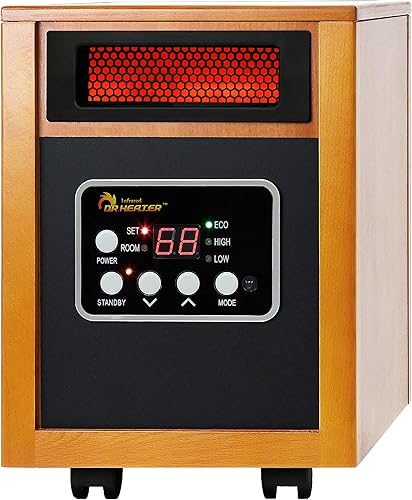
The DR-968, for example, pairs an infrared quartz tube with PTC heat, so the categories aren't always a strict either-or.
The Mr. Heater Big Buddy review covers another portable heater that combines radiant heat and a fan.
Compare the two models in Mr. Heater Buddy vs Big Buddy.
 Best for radiant warmth
DR. INFRARED HEATER Dr Infrared Heater DR-968 Portable
Ceramic space heater vs infrared: how does each feel?
Ceramic forced-air heat moves through the room, while infrared heat is felt most directly by people and surfaces in its path. Think about where you'll sit or work and whether you want air moving around you.
A ceramic heater warms air and uses a fan to carry that heat outward. That can make it a natural choice when you want warmth to spread beyond the area right beside the heater.
Infrared warmth is radiant. It can suit a desk, chair or other defined spot where you want to direct heat, though objects between you and the heater can affect what receives that warmth.
Ceramic vs infrared warmth around a desk
A ceramic heater can help when you want moving warm air across a small office or bedroom. Models with oscillation, such as the Lasko tower, can direct air across a wider area.
Infrared can make sense when you usually stay in one place and want warmth focused toward that seating area. Position the heater according to its manual, with its required clearances and safeguards.
If airflow is part of your decision, our guide to infrared heater vs fan heater explains how radiant and fan-driven warmth differ.
Which heater suits the room and your routine?
Choose ceramic for air movement around a room and infrared for a more focused radiant effect. Match that preference to the space where you'll actually use the heater.
In a shared room, you may want warmth to reach more than one seat. A fan heater can move heated air around, while an oscillating model can sweep its airflow across a broader area.
For a personal work area, the direction of the radiant heat may matter more than broad air movement. Consider whether the heater can face the spot you use without blocking a walkway or sitting too close to furniture.
A best ceramic space heater guide can help you compare options if you decide you want fan-driven heat. For a small vehicle living space, check our best ceramic space heater for RV guide and follow the RV and heater manuals for safe use.
Do infrared and ceramic heaters use different heating methods?
Ceramic describes the heating element, while infrared describes radiant heat; a heater may use one approach or combine them. Check the actual method and controls instead of relying on the broad category name alone.
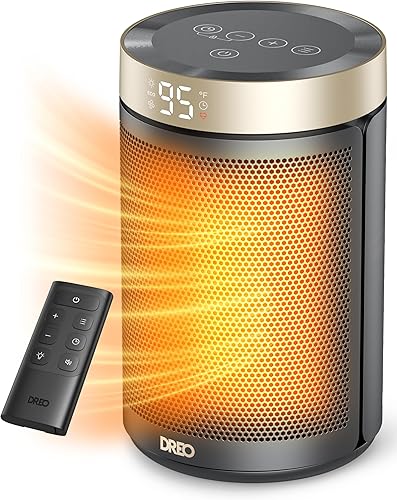
The DREO Space Heater uses a PTC ceramic element and forced air. DREO says its heat funnel design helps warm air circulate farther, and its controls include multiple modes and a thermostat.
The DR-968 combines an infrared quartz tube and PTC. It has a thermostat range of 50 to 85°F, a remote control and a 12-hour automatic shut-off timer.
Those examples show why “ceramic versus infrared” can oversimplify a buying choice. Look at how the heater sends warmth into the room, as well as the thermostat, timer and safety features that fit your needs.
What should you consider before choosing?
Choose by room layout, airflow preference, controls and safe placement. A heater's type alone won't tell you whether it will suit your routine.
How much area do you want to warm?
The DR-968 is designed for large-room heating, while the DREO is listed for 200 square feet and the Lasko for 150 square feet. Coverage figures are not a promise of the same comfort in every room.
Ceiling height, drafts, insulation and where you place the heater can affect how warm a room feels. Follow the manual, and don't try to make a portable heater cover a space beyond its intended use.
Do you want a thermostat or timer?
A thermostat can help you set a target temperature, while a timer can limit how long the heater runs. The DR-968 has a 50 to 85°F thermostat and a 12-hour timer; the DREO has a 41 to 95°F thermostat and a 12-hour timer.
The Lasko tower has a 7-hour timer and a thermostat range of 60 to 85°F. If temperature control matters, compare the range and adjustment steps for the exact model.
Our guide to the best ceramic space heater with thermostat focuses on thermostat features and room use.
How much airflow and sound will you accept?
A fan can distribute warmth, but it also brings moving air and operating sound. DREO says its heater operates at 34 dB, while the DR-968's stated noise level is 39 dB.
Those maker figures describe the models, not how loud every heater will seem in your room. Room acoustics and your distance from the unit can change what you notice.
Where will the heater stand?
Portable heaters need a stable position with clear space around them. Check the manual for placement, electrical use and other safety instructions before you set one up.
The Lasko has overheat protection and cool-touch housing, while the DREO includes tip-over and overheat protection. Safety features are useful, but they don't make blocked vents, unstable placement or unattended operation safe.
Can an infrared thermometer help compare warmth?
An infrared thermometer can compare surface temperatures, but it can't tell you the room's air temperature. Use it to check objects, not as a substitute for a room thermometer.
The Etekcity Lasergrip 774 reads a surface without contact and displays the result on a backlit screen. It has a 12:1 distance-to-spot ratio and measures from −58 to 842°F.
This can help you compare a tabletop or wall before and after running a heater. Keep in mind that the reading is an average across the targeted surface area, not a direct measurement of how warm the room air feels.
Which ceramic and infrared heaters fit these uses?
The DR-968 fits radiant warmth with added PTC heat, while the DREO and Lasko use ceramic forced air. Choose among them by how you want heat delivered and which controls matter most.
DR. INFRARED HEATER Dr Infrared Heater DR-968 Portable
The DR-968 combines an infrared quartz tube with PTC and has a cabinet form with caster wheels. Its remote, thermostat and 12-hour shut-off timer may suit someone who wants radiant and convection-style warmth in one portable heater.
It weighs 19 lb and uses 1500 watts. Check its size and placement requirements against your room before choosing it.
DREO Space Heater
The DREO is a compact ceramic forced-air heater with multiple modes, a remote and a thermostat that adjusts from 41 to 95°F. Its 12-hour timer and stated 34 dB noise level may appeal if you want controls for a bedroom or office.
DREO also describes tip-over detection, overheat protection, flame-retardant materials and a safety plug. Follow the manual for setup and use.
Lasko 23" Ceramic Tower Space Heater
The Lasko is a ceramic tower with 1500 watts of forced-air heat and widespread oscillation. A remote controls its heat settings and timer, while the 7-hour timer can suit shorter heating periods.
Its thermostat adjusts from 60 to 85°F. The tower also has overheat protection and cool-touch housing.
Which should you choose, ceramic or infrared?
Pick ceramic if you want a fan to circulate warm air, and pick infrared if you want radiant warmth directed toward a person or nearby surfaces. For mixed needs, a combination heater such as the DR-968 brings infrared quartz and PTC together.
Choose a DREO or Lasko if forced-air heat, a thermostat and portable controls fit your space. Choose the DR-968 if its combined heating approach and larger cabinet suit your placement needs.
For the final decision, compare airflow, room layout and controls first, then confirm the heater's clearances and instructions. A best infrared heater for garages or best infrared heater for basements guide can help if one of those spaces is your main use.
FAQ
Which is better, a ceramic or infrared space heater?
A ceramic heater is a better fit when you want a fan to circulate warm air around a room. An infrared heater suits a spot where you want radiant warmth directed toward people or nearby surfaces.
For another room-heating choice, compare an electric fireplace vs. a space heater.
Room size, airflow preference and placement help determine which type fits.
Does an infrared heater warm a whole room?
An infrared heater can contribute warmth to a room, but its radiant effect is strongest for people and surfaces in its path. Room layout, insulation and heat loss affect comfort.
For more even air movement, consider a ceramic forced-air heater.
Do ceramic space heaters need a fan?
Many portable ceramic heaters use a fan to move warmed air, including the DREO and Lasko models compared here. That airflow helps spread heat beyond the heater's immediate area, but it also means you may hear the fan and feel moving air.
Can an infrared thermometer measure room temperature?
No. The Etekcity Lasergrip 774 measures surface temperatures, not the temperature of the room air.
Aim it at objects such as a wall or tabletop if you want a surface reading, and use a room thermometer for ambient air temperature.
Are ceramic and infrared heaters safe to leave on?
Use a space heater only as its manual allows, on a stable surface with clear space around it. The models here include features such as tip-over or overheat protection, but those features don't replace supervision, safe placement or following the manufacturer's instructions.
Frequently asked questions
Which is better, a ceramic or infrared space heater?
A ceramic heater is a better fit when you want a fan to circulate warm air around a room. An infrared heater suits a spot where you want radiant warmth directed toward people or nearby surfaces.
Room size, airflow preference and placement help determine which type fits.
Does an infrared heater warm a whole room?
An infrared heater can contribute warmth to a room, but its radiant effect is strongest for people and surfaces in its path. Room layout, insulation and heat loss affect comfort.
For more even air movement, consider a ceramic forced-air heater.
Do ceramic space heaters need a fan?
Many portable ceramic heaters use a fan to move warmed air, including the DREO and Lasko models compared here. That airflow helps spread heat beyond the heater's immediate area, but it also means you may hear the fan and feel moving air.
Can an infrared thermometer measure room temperature?
No. The Etekcity Lasergrip 774 measures surface temperatures, not the temperature of the room air.
Aim it at objects such as a wall or tabletop if you want a surface reading, and use a room thermometer for ambient air temperature.
Are ceramic and infrared heaters safe to leave on?
Use a space heater only as its manual allows, on a stable surface with clear space around it. The models here include features such as tip-over or overheat protection, but those features don't replace supervision, safe placement or following the manufacturer's instructions.