7 Best Kerosene Heaters for Home Use (November 2026)
The best kerosene heaters for home use include the Sengoku HeatMate Portable Kerosene Heater for balanced home heating, the Comfort Glow Indoor Kerosene Convection Heater for larger rooms, and the AHUAWA for included accessories.
On this page (7 sections)
- How we chose kerosene heaters for home use
- Which kerosene heater is best for each home?
- What should you compare before choosing a home kerosene heater?
- What safety steps matter for indoor kerosene heat?
- Do a blower or thermostat make sense at home?
- More guides on this topic
- Which heater should you choose for your home?
The Sengoku HeatMate Portable Kerosene Heater is our pick for the best kerosene heater for home use because its 10,000 BTU output and stated 380 sq ft coverage fit many rooms without jumping to the highest-output model. Its push-button start, automatic shutoff and tip-over switch are useful features to compare.
The right choice depends on your room, how long you need heat and whether the heater's operating instructions suit your space. For a portable electric alternative, see how to use a Dreo space heater.
A kerosene heater is a fuel-burning appliance, so check the manual and plan for safe placement and ventilation before using one indoors.
Our picks at a glance
-
1
 Best for balanced home heating
Sengoku HeatMate Portable Kerosene Heater
9.7/10 our score
See it on Amazon -
2
 Best for larger rooms
Comfort Glow Indoor Kerosene Convection Heater
9.6/10 our score
See it on Amazon -
3

- 4
 Best for radiant heatCheck it
- 5
 Best for adjustable-height useCheck it
- 6
 Check it
Kero World Kerosene Convection Wick Heater
Best for longer stated runtime - 7
 Check it
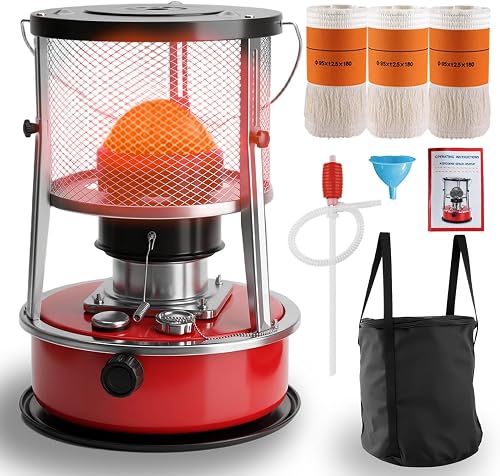
GfsGsjzc Kerosene Heaters Indoor with 3 Wicks
Best for a three-wick design
How we chose kerosene heaters for home use
We compared the stated heat output, coverage, tank size, runtime and safety-related features for each model. We also considered which details help you match a heater to a specific room, such as radiant versus convection heat and whether it needs electricity.
Our score weighs specs, features and buyer feedback against what you're shopping for. Coverage and runtime are manufacturer-stated figures, and actual results can vary with room conditions and use.
| Product | Best for | Heat output | Stated coverage | Tank and runtime | Our score |
|---|---|---|---|---|---|
| Sengoku HeatMate Portable Kerosene Heater | balanced home heating | 10,000 BTU | 380 sq ft | 1.2 gal; up to 14 hours | 9.7 |
| Comfort Glow Indoor Kerosene Convection Heater | larger rooms | 23,800 BTU | 1,000 sq ft | 1.9 gal; up to 12 hours | 9.6 |
| AHUAWA | included accessories | 9,000 BTU | 150–350 sq ft | 1.35 gal; runtime claims vary | 9.5 |
| Kero World | radiant heat | 10,000 BTU | 420–450 sq ft | 1 gal; runtime claims vary | 9.4 |
| vnekjse Kerosene Heater | adjustable-height use | Up to 10,000 BTU | 215–323 sq ft | 6 L; no runtime stated | 9.1 |
| Kero World Kerosene Convection Wick Heater | longer stated runtime | 10,500 BTU | 450 sq ft | 1.1 gal; up to 15 hours | 8.6 |
| GfsGsjzc Kerosene Heaters Indoor with 3 Wicks | a three-wick design | 9,000 BTU stated | About 15–20 m² | 8.5 |
Which kerosene heater is best for each home?
The best fit depends on whether you need balanced room heat, higher output, a smaller footprint or longer stated runtime. These picks are ordered by score, with each one matched to a distinct use.
Sengoku HeatMate Portable Kerosene Heater: Best for balanced home heating
- 10,000 BTU
- Stated coverage of 380 sq ft
- 1.2-gallon tank
- Push-button start and tip-over switch
A compact portable heater with push-button start, an automatic shutoff and a stated runtime of up to 14 hours.
Pros
- Push-button start
- Tip-over switch
- Protective safety grills
Cons
- Coverage is smaller than the largest pick
- Room ventilation and safe placement still need planning
Sengoku's HeatMate is the most balanced choice here for a room that needs supplemental heat. It provides 10,000 BTU and has stated coverage of 380 sq ft, with a 1.2-gallon tank and up to 14 hours of runtime.
Push-button start means you don't need matches or household electricity to start it. The automatic shutoff, tip-over switch and protective safety grills are useful features, but you still need to follow the manual's instructions for placement, fuel and ventilation.
Its compact, portable design can suit a home where you may move a heater between rooms. Measure the floor area and keep the heater clear of furniture, curtains and other combustible items as directed by the manufacturer.
Choose it for a middle-sized space where 10,000 BTU is a closer match than the highest-output option. For outdoor heating needs, compare it with our guide to the best kerosene heater for outdoor use.
Comfort Glow Indoor Kerosene Convection Heater: Best for larger rooms
- 23,800 BTU
- Stated coverage of 1,000 sq ft
- 1.9-gallon tank
- 360-degree heat
Its higher stated output and broad heating radius suit a larger space that needs supplemental heat.
Pros
- Highest stated output here
- Fuel gauge
- Tip-over emergency shutoff
Cons
- Larger tank and heater body need more room
- High output may be more than a small room needs
Comfort Glow is the pick for a larger area that needs more output. Its 23,800 BTU rating and stated coverage of up to 1,000 sq ft make it the highest-output heater in this group.
The convection design sends heat in a 360-degree radius, while the 1.9-gallon tank is stated to run up to 12 hours. A built-in fuel gauge helps you see how much fuel remains, and battery-powered ignition avoids the need for household power.
Its larger output may be more than you need for a small bedroom or office. Match the heater's instructions and coverage to your room, and keep clear space around the heater for safe operation.
AHUAWA: Best for included accessories
- 9,000 BTU
- Stated coverage of 150–350 sq ft
- 1.35-gallon tank
- Funnel, siphon pump, gloves and extra wicks
This portable heater comes with several setup and care accessories, plus a fuel gauge and protective net.
Pros
- Accessory set includes a siphon pump and extra wicks
- Fuel gauge
- No electricity required
Cons
- Runtime descriptions differ
- Coverage claims vary by description
AHUAWA suits buyers who want a portable heater with a useful accessory set. The package includes a funnel, siphon pump, gloves and extra wicks, while the heater has a 1.35-gallon tank and fuel gauge.
Its output is stated as 9,000 BTU, with coverage figures ranging from 150 to 350 sq ft. Runtime descriptions vary, so don't plan around a precise number of hours without checking the instructions for the exact model.
The protective net and solid base are listed as safety features. Keep the accessory set stored where you can find it, but use only fuel and setup steps allowed by the manual.
Kero World: Best for radiant heat
- 10,000 BTU
- Stated coverage of about 420–450 sq ft
- 1-gallon tank
- Radiant heating
A radiant-style heater with a removable fuel tank and shutoff features for supplemental home heat.
Pros
- Radiant heat
- Tip-over shutoff
- Removable tank
Cons
- Coverage figures vary
- Runtime descriptions differ
Kero World is a radiant-heating option with 10,000 BTU output and a removable 1-gallon tank. Stated coverage ranges from about 420 to 450 sq ft across its specifications and product details, so use the lower figure when estimating room fit.
The model includes shutoff and tip-over safety features, along with battery-powered ignition and a pin-type wick system. Its radiant design may appeal if you want direct warmth near the heater rather than choosing the highest output for a large open area.
Runtime descriptions also vary, so check the operating manual for fuel use and refill guidance. Keep the removable tank and heater on a stable surface, following the clearance instructions.
vnekjse Kerosene Heater: Best for adjustable-height use
- 10,000 BTU maximum
- Stated coverage of 215–323 sq ft
- 6 L tank
- Adjustable hood
This portable heater has an adjustable hood and a fuel gauge, with a stated coverage range for smaller spaces.
Pros
- Adjustable hood
- Fuel gauge
- Tip-over shutoff
Cons
- No runtime figure
- Some use claims include cooking and outdoor activities
The vnekjse heater has a stated maximum output of 10,000 BTU and coverage of 215 to 323 sq ft. Its 6 L tank is relatively large among these compact options, though no runtime figure is stated.
An adjustable hood and fuel gauge make the design distinct from simpler models. The heater is also described for cooking, but choose it as a home heater only if the instructions permit the intended indoor use and setup.
A tip-over shutoff and protective grills are included features. Read the manual closely before using any adjustable parts, and do not place cookware on a heater unless the manufacturer expressly allows it.
Kero World Kerosene Convection Wick Heater: Best for longer stated runtime
- 10,500 BTU
- Stated coverage of 450 sq ft
- 1.1-gallon tank
- Up to 15 hours runtime
A compact convection-style option with a stated runtime of up to 15 hours and a Sure Seat Chimney System.
Pros
- Up to 15 hours stated runtime
- Radiant and convective heat
- UL listing stated
Cons
- Less output than the larger-room pick
- Check the manual for setup and safe operation
Kero World's convection wick heater is a good match when stated runtime is a priority. It provides 10,500 BTU, with coverage up to 450 sq ft and a stated runtime of up to 15 hours from a 1.1-gallon tank.
The heater combines radiant and convective heat and has a Sure Seat Chimney System. Its product details also state UL listing; check the heater's label and manual for the exact model and instructions.
The 12 lb weight and compact dimensions may help if you need to move it between suitable indoor spaces. Keep fuel storage separate from the heater and follow the manual's refueling and shutdown steps.
GfsGsjzc Kerosene Heaters Indoor with 3 Wicks: Best for a three-wick design
- Three wicks
- 9,000 BTU stated
- 360-degree radiant heat
- Adjustable hood
A three-wick heater with an adjustable hood and a stated radiant heating area for a compact space.
Pros
- Three-wick design
- Adjustable hood
- No electricity required
Cons
- No tank capacity stated
- Safety claims should not replace the manual or local guidance
GfsGsjzc stands out for its three-wick design and 360-degree radiant heat. It is stated to produce 9,000 BTU and heat an area of about 15–20 m².
An adjustable hood is included, and the heater is described for heating and cooking. For home use, focus on its heating instructions and don't assume that cooking features make every indoor setup suitable.
The product details don't state tank capacity, so it is harder to estimate how often you'll need to refuel. Check the manual for wick care, fuel handling and any limits on where the heater can be used.
What should you compare before choosing a home kerosene heater?
Compare the heater's stated coverage with your room's floor area, then check the output, tank capacity and runtime. Coverage is a starting point rather than a promise, since room insulation, ceiling height and air leakage can change how much heat you need.
Next, check the features that affect daily use. Push-button or battery ignition, a fuel gauge, removable tank, wick design and tip-over shutoff can make a model easier to operate, but they don't replace careful setup.
Decide whether you need convection or radiant heat. For a fan-free electric alternative, compare oil-filled radiator heaters.
Convection models spread heat around the room, while radiant models direct warmth outward from the heater.
The best style depends on where you'll sit and how the room is arranged.
For a different space or heater type, our Best Space Heater For Garages and Best Space Heater For Basements guides cover other options. A forced-air model serves a different job, so compare our guide to the best kerosene torpedo heater if you're considering one.
What safety steps matter for indoor kerosene heat?
Follow the specific heater manual and local fire-safety guidance every time you use a kerosene heater indoors. Set it on a stable, level surface and keep the clearances required by the manufacturer from walls, furniture, curtains and anything else that can burn.
Use the fuel type specified by the manufacturer. Refuel only as instructed, with the heater off and cool if the manual requires it, and store fuel in an approved container away from heat sources.
Keep children and pets away from the hot surface, and don't leave a burning heater unattended. A shutoff switch is an added safeguard, not a reason to place the heater where it could be knocked over.
If you are unsure whether a particular model is suitable for a room, stop and check its manual before using it. Our Can You Use a Kerosene Heater Indoors? guide covers indoor-use questions in more detail.
Do a blower or thermostat make sense at home?
A blower may help move warm air through a larger room, while a thermostat can make temperature control simpler. Check that the exact model has the feature you need and that the feature works with your intended setup.
See our guides to a best kerosene heater with blower and a best kerosene heater with thermostat for those specific options. If you are choosing between a heating appliance and a cooking design, our guide to a kerosene heater and stove explains the difference.
A small heater may suit a tighter room, but verify its stated coverage and clearance needs before you buy. See how to choose the best small kerosene heater for indoor use.
More guides on this topic
- How to Choose a Kerosene Heater for a Greenhouse
- Vented Kerosene Heaters: What to Look For
Which heater should you choose for your home?
Choose the Sengoku HeatMate for balanced supplemental heat and the Comfort Glow if you need the highest stated output for a larger area. Consider AHUAWA for its included accessories, Kero World for radiant heat, or the Kero World convection wick model if its longer stated runtime fits your needs.
Compare the exact model instructions, room coverage and safety features before you decide. For more brand-specific options, see our best Dyna-Glo kerosene heater guide or check the current best kerosene heater on sale page.
Our top 3 picks at a glance
-
1
Best for balanced home heating
Sengoku HeatMate Portable Kerosene Heater
9.7/10 our score
See it on Amazon -
2
Best for larger rooms
Comfort Glow Indoor Kerosene Convection Heater
9.6/10 our score
See it on Amazon -
3
Frequently asked questions
What is the best kerosene heater for home use?
The Sengoku HeatMate is our top pick for balanced home heating, with 10,000 BTU output, stated coverage of 380 sq ft, push-button start and a tip-over switch. For a larger room, the Comfort Glow has 23,800 BTU output and stated coverage of up to 1,000 sq ft.
Choose by room size and follow the heater's manual for indoor use.
Can you use a kerosene heater indoors?
Some models are designed for indoor use, but safe operation depends on the exact heater, ventilation, placement and maintenance. Follow the owner's manual and local fire-safety guidance, keep the heater away from anything that can burn, and never leave it unattended.
Check the specific model's instructions before using it inside.
How do I choose the right size kerosene heater for my home?
Start with the room's floor area and compare it with the heater's stated coverage and output. A 10,000 BTU model may suit a smaller space, while the Comfort Glow states coverage up to 1,000 sq ft.
Treat coverage as a guide, since insulation, room layout and outdoor conditions affect heating needs.
Do kerosene heaters need electricity?
Several models here operate without household electricity, which can help during an outage. Ignition methods vary, though: the Sengoku uses push-button start, while other models use battery-powered ignition or a wick system.
Read the instructions for fuel, ignition and shutdown before use.
Are kerosene heaters suitable for garages?
Some of these heaters are described for garage use, but room ventilation, clearance and the exact model's instructions still matter. A garage may also have fuel, tools or other materials that affect safe placement.
See our Best Kerosene Heater For Garages guide for garage-specific considerations.