Why Is My Space Heater Tripping the Breaker?
On this page (5 sections)
Your space heater is tripping the breaker because it’s drawing too much power for the circuit. This usually happens when the heater, a high-wattage appliance, overloads an electrical circuit that’s also powering other devices.
We found that space heaters are often one of the biggest power consumers in your home. They can demand a lot of electricity, especially on circuits that are already heavily used. This power surge causes the circuit breaker to safely shut off to prevent overheating and potential fire hazards.
TL;DR: Why Your Space Heater is Tripping the Breaker
- Space heaters use a lot of power.
- They can overload a circuit.
- Other devices on the same circuit add to the load.
- The breaker trips to prevent electrical hazards.
Let’s walk through exactly how this works and what you can do about it, step by step.
Understanding Why Your Space Heater Overloads Circuits
Your space heater trips the breaker because it’s a power-hungry appliance. It demands a lot of electricity. When this demand exceeds what a circuit can safely handle, the breaker does its job and trips.
Think of your home’s electrical system like a network of roads. Each road (circuit) has a speed limit and a weight limit. If too many heavy trucks (high-power appliances) try to use the same road at once, it becomes unsafe. The traffic cop (circuit breaker) then steps in to prevent a pile-up.
How Electricity Flows in Your Home
Electricity comes into your home and gets distributed through a series of circuits. Each circuit is designed to carry a certain amount of current, measured in amperes (amps). You’ll typically find these circuits rated for 15 or 20 amps in residential settings.
Every outlet and light fixture in your home is connected to one of these circuits. When you plug something in, it draws power from that circuit. A space heater draws a significant amount of power, often between 1,000 and 1,500 watts (U.S. Department of Energy).
Watts, Amps, and Volts Explained Simply
Let’s quickly break down these terms. Think of electricity like water flowing through a pipe.
- Volts (V): This is the “pressure” of the water. In most US homes, it’s 120 volts for standard outlets.
- Amps (A): This is the “flow rate” or how much water is moving. Your circuit breakers are rated in amps.
- Watts (W): This is the “power” or the work the water can do. It’s volts multiplied by amps (V x A = W).
A typical 1,500-watt space heater on a 120-volt circuit will draw about 12.5 amps (1500 W / 120 V = 12.5 A). If you plug this into a 15-amp circuit, it leaves very little room for anything else. If you have other items on that same circuit, you’re headed for an overload.
Common Reasons for Space Heater Overloads
It’s rarely just the space heater. Often, it’s a combination of factors that push a circuit past its limit. Understanding these factors helps you pinpoint the problem.
Too Many Appliances on One Circuit
This is the most frequent culprit. You might not even realize how many items are sharing a single circuit. Imagine your bedroom circuit powering your lights, TV, phone charger, alarm clock, and then you add a powerful space heater. Each item adds to the total electrical load.
When the total amperage drawn by all devices on a circuit exceeds its rated capacity (e.g., more than 15 amps on a 15-amp circuit), the breaker trips to protect your home from damage and fire.
Old or Weak Wiring
Older homes may have wiring that isn’t designed for today’s high-demand appliances. If your home was built decades ago, its electrical system might be fine for basic lighting and a few small electronics. Adding a high-wattage space heater can stress these older, less robust circuits.
Even if the wiring itself isn’t “weak,” it might be a thinner gauge wire, which means it has a lower capacity for current. This makes tripping more likely.
Faulty Space Heater
Sometimes, the problem isn’t your circuit, but the heater itself. A damaged or malfunctioning space heater can draw an irregular or excessive amount of current, causing the breaker to trip. This is a safety feature, signaling a potential issue with the appliance.
Signs of a faulty heater include strange noises, burning smells, or inconsistent operation. If you suspect your heater is the problem, discontinue use immediately.
Overloaded Extension Cords or Power Strips
Using an extension cord or power strip with a space heater can create its own set of problems. Many extension cords aren’t designed to handle the continuous, high power draw of a space heater. If the cord is too thin or too long, it can overheat and even cause a fire.
Power strips often have surge protectors, but they don’t increase the circuit’s capacity. Plugging a space heater into a power strip alongside other devices can easily lead to an overload on the strip itself, or on the wall outlet it’s plugged into.
Identifying the Overloaded Circuit and Its Load
So, how do you figure out which circuit is tripping and what’s on it? It takes a little detective work, but it’s not too difficult. This step is crucial for finding a solution.
Checking Your Electrical Panel
Your electrical panel, also known as your breaker box, is usually in your basement, garage, or utility closet. When a breaker trips, its switch will move to the “off” position or a middle position. This is your first clue.
- Locate the tripped breaker.
- Flip it completely to “off”, then firmly back to “on.”
- Check if the problem persists.
If it trips again immediately or soon after, you know that circuit is indeed the problem. Most breaker boxes have labels, but they can be vague or outdated. “Bedroom” could mean several rooms or outlets.
Mapping Your Outlets
To really understand what’s on a circuit, you’ll need to do some mapping. This helps you visualize the electrical load.
- Turn off the main power switch for the house (or just the specific breaker you suspect).
- Grab a lamp or a small radio.
- Go room by room, plugging the lamp into every outlet.
- If the lamp doesn’t turn on, you’ve found an outlet on that circuit.
- Make a list or a simple diagram of all outlets and devices connected to that circuit.
This exercise will reveal which other devices are sharing power with your space heater. You might be surprised at how many things are connected to a single circuit!
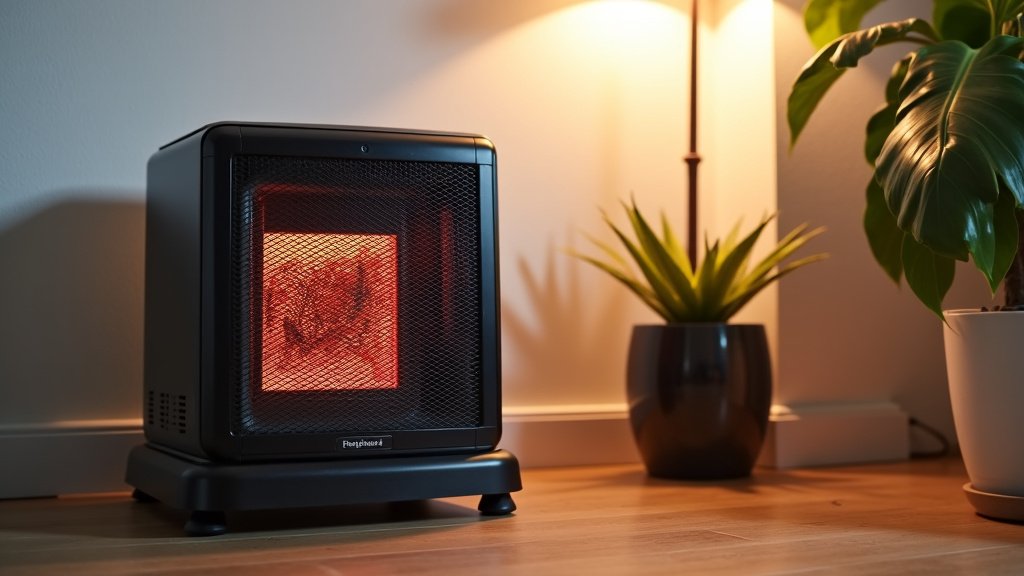
Troubleshooting Steps for Tripping Breakers
Once you’ve identified the problem circuit and its load, you can start troubleshooting. Your goal is to reduce the electrical demand on that specific circuit.
Practical Solutions for Overload Issues
Here are immediate actions you can take to stop your space heater from tripping the breaker. See the related guide to space heater breaker trips. These are usually quick and effective.
- Move the heater to a different room or outlet that’s on a separate, less-used circuit.
- Unplug other high-power appliances from the same circuit. Think hair dryers, vacuum cleaners, microwaves, or blenders.
- Consider using a lower-wattage space heater if possible. A 750-watt heater draws half the power of a 1500-watt model. For specific recommendations, consult our guide to the best space heater for bedrooms.
- Ensure the space heater is plugged directly into a wall outlet, not an extension cord or power strip.
Many experts say that dedicating a circuit to a space heater is the safest approach (National Electrical Code).
When to Consider Professional Help
If the breaker trips even when the space heater is the only item plugged in, or if it trips frequently regardless of what’s plugged in, you might have a deeper electrical issue. This is when it’s time to call in a qualified electrician.
An electrician can assess your home’s wiring, identify faulty outlets or appliances, or suggest panel upgrades if your electrical system is truly outdated and cannot handle your household’s power needs.
Safety Checklist for Space Heater Use
Beyond preventing trips, safe operation is key. Space heaters are a common cause of home fires (National Fire Protection Association).
Here’s a quick checklist to keep you and your home safe:
- Always plug space heaters directly into a wall outlet.
- Keep heaters at least 3 feet away from anything flammable.
- Never leave a space heater running unsupervised.
- Place heaters on a stable, level surface.
- Inspect the cord for frays or damage before each use.
- Ensure your heater has an automatic shut-off feature.
Comparing Space Heater Types and Their Power Draw
Not all space heaters are created equal when it comes to power consumption. Knowing the types can help you choose wisely.
| Heater Type | How It Works | Typical Wattage | Circuit Impact |
|---|---|---|---|
| Ceramic Fan Heaters | Heats ceramic plates, then a fan blows warm air. | 750-1500W | High; quick heat, but can overload easily. |
| Oil-Filled Radiators | Heats oil inside fins, radiating warmth slowly. | 700-1500W | High; slower to heat, but maintains warmth. |
| Infrared/Radiant Heaters | Heats objects directly, like sunshine. | 600-1500W | Moderate to High; efficient for direct warmth. |
| Micathermic Heaters | Combines convection and radiant heat. | 600-1500W | Moderate to High; heats quickly, silent. |
As you can see, most popular space heater types fall into the 700-1500 watt range. This high wattage is why they are so prone to tripping breakers.
Conclusion
Dealing with a space heater that trips your breaker can be frustrating, but it’s a clear signal from your electrical system that something needs attention. We’ve shown that it almost always comes down to too much power on one circuit. By understanding how your home’s electricity works and identifying the overloaded circuit, you can take simple steps to resolve the issue safely.
Whether you move your heater, unplug other devices, or opt for a lower-wattage model, prioritizing electrical safety is key. If the problem persists, or you suspect a deeper electrical issue, don’t hesitate to contact a qualified electrician for professional help. Your safety and peace of mind are worth it.
Frequently Asked Questions
Is it dangerous if my space heater keeps tripping the breaker?
Yes, it can be dangerous. While the breaker is doing its job by tripping to prevent overheating, frequent trips indicate an overloaded circuit. This can lead to wiring damage, fire hazards, or appliance damage if not addressed.
Can a faulty wall outlet cause my space heater to trip the breaker?
Absolutely. A worn-out or damaged wall outlet can create resistance, leading to increased heat and voltage drops, which can cause the breaker to trip. It’s wise to inspect the outlet for any visible damage or looseness.
Why does my space heater trip the breaker in one room but not another?
This suggests that the electrical circuits in your rooms have different loads or capacities. The room where it trips likely has more devices on that specific circuit, or the circuit itself has a lower amperage rating, leading to an overload.
Does the age of my home’s wiring affect how often my breaker trips?
Yes, older homes often have wiring that wasn’t designed for today’s high-power appliances. Their circuits may have lower amperage ratings or thinner gauge wires, making them more susceptible to tripping when a space heater is used.
Can I use a power strip with a space heater if it’s the only thing plugged into it?
It is generally not recommended to use a power strip with a space heater, even if it’s the only item plugged in. Space heaters draw significant, continuous power, and most power strips are not rated for such high demands, risking overheating or fire. Always plug directly into a wall outlet.


