Do I Need a Fire Extinguisher Near a Wood Stove?
On this page (7 sections)
- Why a Fire Extinguisher is Essential for Wood Stove Safety
- Choosing the Right Extinguisher for Your Wood Stove
- Where to Place Your Fire Extinguisher
- Maintaining Your Fire Extinguisher: It’s Not a “Set It and Forget It” Item
- When to Use Your Fire Extinguisher (and When Not To)
- Conclusion
- Frequently Asked Questions
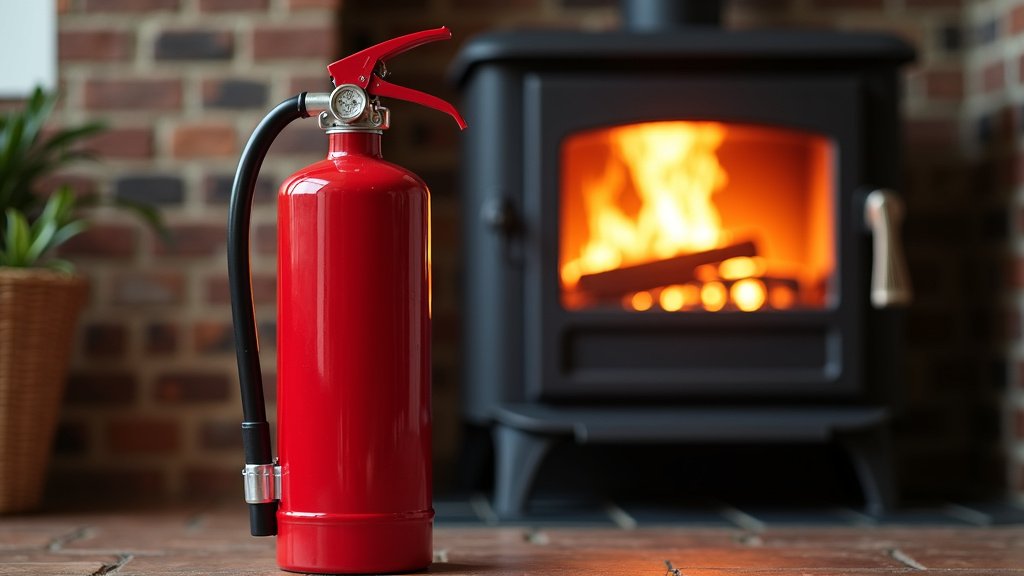
Yes, you absolutely need a fire extinguisher near a wood stove. Having one close by is essential for safety. It allows you to quickly handle small fires before they become big problems.
Wood stoves provide cozy warmth, but they also bring fire risks. Things like sparks, embers, or even a sudden flare-up can happen. A fire extinguisher gives you a first line of defense against these dangers. It’s a small investment that offers huge peace of mind.
- A fire extinguisher is critical for wood stove safety.
- Sparks and embers can easily cause unexpected fires.
- Having an extinguisher helps you act fast.
- It’s your first tool to stop a small fire.
- The right type of extinguisher is very important.
So, let’s explore why this safety measure is so important and what kind of extinguisher you should choose for your wood-burning setup.
Why a Fire Extinguisher is Essential for Wood Stove Safety
You might be thinking, “Do I really need another safety gadget?” When it comes to wood stoves, the answer is a resounding yes. A fire extinguisher isn’t just a suggestion; it’s a critical safety device for your home.
Wood stoves are wonderfully efficient for heating, but they come with inherent risks. Sparks can escape, embers can pop out, and chimney fires can happen quickly. Having an extinguisher nearby means you can react immediately to a small problem before it becomes a disaster.
Understanding the Risks: More Than Just Flames
It’s easy to focus on the big, roaring fires, but many wood stove incidents start small. We found that unattended embers are a common culprit. A tiny spark landing on a rug or piece of wood can ignite in seconds. Even creosote buildup in your chimney can lead to a fire.
Think of an extinguisher as your personal safety net. You hope you never need it, but you’ll be profoundly grateful if you do. It’s about being prepared for the unexpected.
Common Wood Stove Fire Hazards
- Escaping Sparks: Hot embers can fly out when you open the stove door or when drafting is strong.
- Creosote Buildup: This tar-like substance accumulates in chimneys and is highly flammable (Chimney Safety Institute of America).
- Overheating: Too much wood or too high a burn temperature can overheat the stove and nearby combustibles.
- Proximity to Combustibles: Keeping flammable materials too close to the stove is a big risk.
- Ash Disposal: Hot embers can remain in ashes for days, igniting trash cans or other materials if not properly handled.
Choosing the Right Extinguisher for Your Wood Stove
Not all fire extinguishers are created equal. For a wood stove, you need one that can handle the specific types of fires likely to occur. This usually means an ABC-rated extinguisher.
An ABC extinguisher is versatile, meaning it can put out fires involving ordinary combustibles (like wood), flammable liquids, and electrical equipment. This makes it the best choice for home use, especially near a heat source like a wood stove.
Deciphering Fire Extinguisher Classes
Fire extinguishers are classified by letters indicating the types of fires they combat. Knowing these classes helps you pick the correct one.
| Class | Type of Fire | Examples |
|---|---|---|
| A | Ordinary Combustibles | Wood, paper, cloth, plastic |
| B | Flammable Liquids | Gasoline, oil, grease, paint |
| C | Electrical Equipment | Appliances, wiring, outlets |
| D | Combustible Metals | Magnesium, titanium (industrial use) |
| K | Cooking Oils/Fats | Vegetable oils, animal fats (kitchen specific) |
Since a wood stove fire could involve wood (Class A), and potentially other materials, an ABC dry chemical extinguisher is your safest bet. It’s designed to smother flames and interrupt the chemical reaction of the fire.
Size Matters: What Capacity Do You Need?
Fire extinguishers come in various sizes, often measured by weight (e.g., 5 lb, 10 lb). For home use near a wood stove, a 5-pound or 10-pound ABC extinguisher is generally recommended.
A smaller 2.5-pound extinguisher might seem convenient, but it runs out quickly. For something that could involve hot embers or small flames from a wood stove, a larger capacity gives you more extinguishing power and a longer discharge time, which can be critical (National Fire Protection Association).
Where to Place Your Fire Extinguisher
Having an extinguisher is only useful if you can grab it quickly. Placement is key. It needs to be easily accessible but not so close that it’s in the way or could get damaged by heat.
Imagine a small fire starts. Can you reach your extinguisher in seconds, without getting too close to the flames? This is the scenario you need to plan for. Many experts recommend keeping it within 20 feet of the wood stove, but not directly adjacent.
Ideal Placement Strategies
Mount your extinguisher on a wall, away from direct heat. A good spot might be on an adjacent wall, near an exit, or in a clear pathway. Make sure it’s visible and unobstructed by furniture or decorations.
You don’t want to be fumbling around in a panic. Practice mentally (or physically!) getting to it. Does anything block your path? Can you easily unmount it? These small details can make a big difference in an emergency.
Maintaining Your Fire Extinguisher: It’s Not a “Set It and Forget It” Item
A fire extinguisher is like a smoke detector; it needs periodic checks to ensure it’s ready when you need it. A neglected extinguisher might not work, making it useless in an emergency.
Don’t just hang it up and forget about it. Regular inspection is a simple but vital part of your home safety plan. It only takes a minute or two to check a few key things.
Your Fire Extinguisher Maintenance Checklist
Here’s a quick checklist to keep your extinguisher in top shape:
- Check the Pressure Gauge: The needle should be in the green zone. If it’s not, the extinguisher may need recharging or replacing.
- Inspect the Pin and Seal: Ensure the tamper seal is unbroken and the pin is securely in place.
- Look for Physical Damage: Check for dents, rust, or leaks. Any damage can compromise its function.
- Clean the Nozzle: Make sure the nozzle is clear of debris and not blocked.
- Shake Monthly: For dry chemical extinguishers, shaking it once a month prevents the powder from compacting.
- Know the Expiration Date: Extinguishers have a lifespan. Note the date and plan for replacement or professional servicing.
When to Use Your Fire Extinguisher (and When Not To)
Knowing how to use a fire extinguisher is important, but knowing when to use it is even more so. Your primary goal is always personal safety first.
Extinguishers are for small, contained fires. If a fire is growing rapidly, blocking your exit, or producing a lot of smoke, your priority shifts from fighting the fire to evacuating your home and calling 911 (U.S. Fire Administration).
The “P.A.S.S.” Method: How to Operate an Extinguisher
If you determine the fire is small enough to tackle, remember the acronym P.A.S.S.:
- P – Pull the Pin: Break the tamper seal and pull the pin from the handle.
- A – Aim Low: Point the nozzle or hose at the base of the fire. This is where the fuel source is.
- S – Squeeze the Lever: Press the handle to release the extinguishing agent.
- S – Sweep Side to Side: Move the nozzle from side to side, covering the area of the fire until it is out.
Always keep an exit behind you and watch for re-ignition. If the extinguisher empties and the fire isn’t out, or if it flares up again, evacuate immediately.
Conclusion
Protecting your home from wood stove fires is straightforward but vital. We’ve seen that a fire extinguisher isn’t just an option; it’s a critical safety device. Choosing a wood stove fire extinguisher, placing it correctly, and maintaining it are all part of responsible wood stove ownership. These simple steps ensure you’re prepared for small incidents. Take action today to get the right extinguisher and secure your peace of mind.
Frequently Asked Questions
Is a water extinguisher suitable for a wood stove fire?
No, a water-based extinguisher is generally not recommended for wood stove fires. While it can handle Class A fires (like wood), it won’t be effective for electrical fires or flammable liquids, which could also be part of a wood stove incident. An ABC dry chemical extinguisher is much more versatile and safer.
How often should I replace my home fire extinguisher?
Most disposable home fire extinguishers have a lifespan of 5 to 12 years. Check the manufacturer’s date printed on the canister. If the pressure gauge drops out of the green zone or if there’s any physical damage, replace it immediately, regardless of the expiration date.
Can I use a fire extinguisher on a chimney fire?
Using a fire extinguisher on a chimney fire is not typically the primary solution. You can use an ABC extinguisher if the fire has spread from the chimney into the living space. However, for a chimney fire itself, you should close all air inlets to the stove, call 911, and wait for professional firefighters.
Should I have more than one fire extinguisher in my home with a wood stove?
Yes, having more than one extinguisher is a good idea. In addition to the one near your wood stove, it’s wise to have another in the kitchen and possibly one on each level of your home. This ensures you have quick access to fire suppression wherever a small fire might start.
What’s the difference between a rechargeable and non-rechargeable extinguisher?
Non-rechargeable extinguishers are designed for one-time use and are discarded after being emptied or expired. Rechargeable models can be refilled and serviced by a professional after use, which can be more cost-effective in the long run. For wood stove safety, a rechargeable 5- or 10-pound ABC unit offers greater value and reliability.